Manatee County staff propose phased increase to water and wastewater facility investment fees
Loading...
Summary
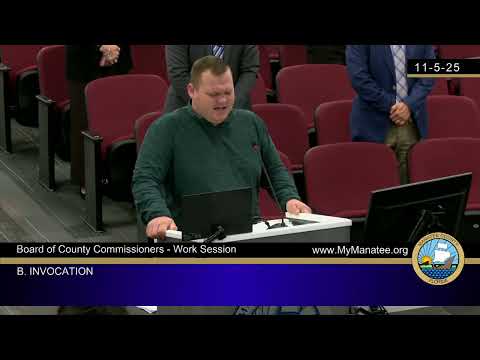
Manatee County officials told the board at a Nov. 5 work session that growing capital costs and post‑2018 inflation require recalculating the county’s facility investment fees, which pay for infrastructure to serve new development.
Manatee County officials told the board at a Nov. 5 work session that growing capital costs and post‑2018 inflation require recalculating the county’s facility investment fees, which pay for infrastructure to serve new development.
“Any anywhere from, 30% increase since 2018 to, well over, well over 200 inflation, rates for commodities,” Patrick Shay, Manatee County utilities director, said in presenting the county’s capital plan and cost drivers, later adding that the county’s utility five‑year CIP had risen from just under $400 million to roughly $1.6 billion in today’s estimates.
Outside rate consultant Mark Tuma said the firm’s methodology follows the legal standard known as the dual rational nexus: identify growth‑related capital, allocate capacity and divide that cost by level of service (an equivalent residential connection, or ERC, equals 250 gallons per day for water) to create a per‑ERC fee. “Based on the methodology…we’re coming up with a calculated fee of $10,861,” Tuma said, citing the draft FIF calculation.
Florida law limits increases implemented at any one time, so the consultant explained a 50% statutory cap on the proposed raise would phase in a per‑ERC fee of about $7,369 over four years — an incremental increase of roughly $614 per year. The consultant’s benchmarking showed the county’s current combined water/wastewater FIFs (about $4,913 by the consultant’s table) would move to the capped level and remain broadly comparable with other nearby jurisdictions that have recently updated fees.
Commissioners pressed staff on oversight, eligibility and equity. Commissioner Bearden asked how the county verifies the required legal nexus and prevents FIF revenue from subsidizing ineligible assets; staff pointed to annual accounting, a separate FIF fund and conservative eligibility calculations that exclude local distribution, vehicles and grant‑funded projects. “When the projects are brought forward…the financing strategy is laid before that,” staff said, adding that state rules require refunds or adjustments if collections exceed lawful uses.
Several commissioners sought more detailed, expedited analysis for development east of the county’s development boundary (referred to in the meeting as FDAP/FDAB). Those requests centered on transmission costs, booster pumping, turnaround and the risk that credits for developer‑built infrastructure could leave general ratepayers paying for broader capacity needs. Staff committed to a targeted East‑of‑boundary analysis and said it could be delivered in roughly three months.
No formal action or vote occurred at the work session. Staff said the FIF report remains in draft form pending final FY25 actuals and recommended edits; the board was asked to provide direction before any ordinance or fee schedule is brought forward for adoption.
Ending note: the consultants and staff recommended transparency safeguards — annual FIF accounting reports, turnover agreements for CDD assets, and conservative asset eligibility rules — and the board asked staff to return with more detail on special‑district turnovers and the East‑of‑boundary analysis before moving to ordinance language.