
Stearns County officials warned of food and service gaps as federal shutdown disrupts SNAP and emergency aid
Get AI-powered insights, summaries, and transcripts
Subscribe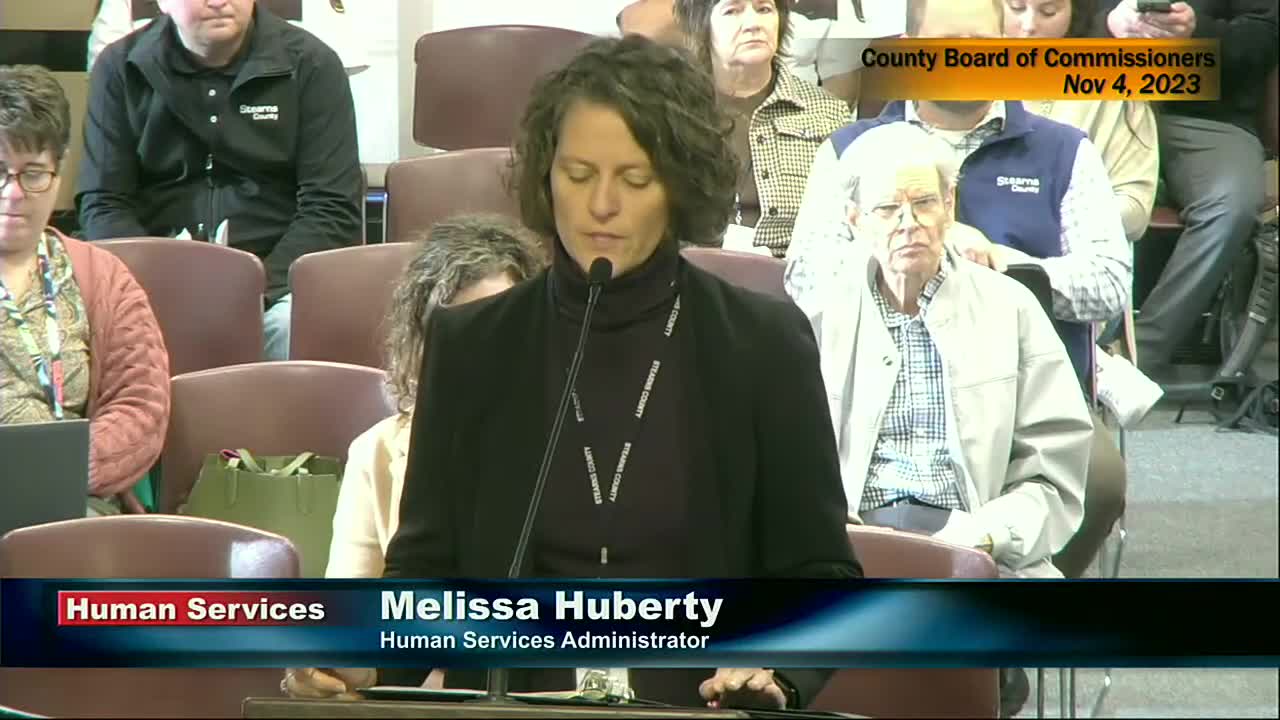
Summary
Human Services Administrator Melissa Huberty told the Stearns County Board the partial federal funding for SNAP and depleted local emergency funds are already straining county services and could increase child-protection and uncompensated-care demands if the shutdown persists.
Human Services Administrator Melissa Huberty told the Stearns County Board of Commissioners on Nov. 4 that a partial federal funding decision for the Supplemental Nutrition Assistance Program (SNAP) for November is complicating county administration and could produce significant downstream effects for local families and providers.
"The state issued an update that the federal government will partially fund SNAP, for November," Huberty said, and added that the county’s eligibility and payment systems are designed for full monthly disbursements and "usually require workarounds on county staff." She told commissioners that counties typically receive SNAP funding over a 10-day period beginning on the 4th of each month.
Why it matters: Huberty said the county serves about 12,500 SNAP recipients — "approximately 7,000 are adults and 5,500 children" — and noted SNAP spending is a local economic driver. "For every dollar spent on SNAP, local economies at minimum get a dollar fifty back in return," she said. When benefits are delayed or reduced, she said, families can face immediate food insecurity and cascading shortfalls in rent, utilities and child care.
Huberty also warned of other program vulnerabilities tied to the shutdown. She said senior-waiver services, foster-care reimbursements, and child-protection case management are "heavily federally funded" and that the county is already out of some emergency assistance funds. "We have less than $57,000 remaining in our emergency general assistance funding, and it's depleting rather quickly," she said.
Board questions and next steps: Commissioners pressed staff about local responses. Commissioner Persky asked whether food shelves and faith-based organizations can be better coordinated; Huberty said lists of local food shelves are publicly available and the county will post resources on its website and coordinate with community partners. Commissioner Clark asked whether the county should consider using remaining ARPA or local reserves; Clark said he would like staff to "come back to us with a recommendation if it looks like there's something else we need to do."
Huberty cautioned that interruptions in public assistance historically produce a rise in child-protection reports about nine to 10 months later — "we are likely to see an increase" — and urged that any response plan weigh this medium-term demand for deep-end services. No formal board action was taken; the presentation was informational and commissioners asked staff to return with recommendations if county funds are needed.
Ending: Commissioners thanked county staff for handling complex, evolving guidance and for coordinating with community partners; they emphasized the limits of county authority while acknowledging the need to plan local contingencies if federal funding remains disrupted.