Get Full Government Meeting Transcripts, Videos, & Alerts Forever!
Get email alerts on the Annual Financial Report topic
No spam. Unsubscribe anytime.
Washington Elementary presents 2024–25 annual financial report; board questions carryover and county tax repayment
Summary
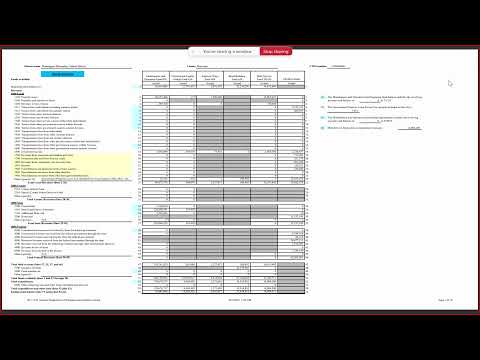
Daniel O’Brien, the district finance presenter, reviewed the Washington Elementary School District’s 2024–25 Annual Financial Report at the Oct. 9 virtual governing board meeting and highlighted major funds, recent coding corrections and how federal‑grant reimbursements affect year‑end balances.
Daniel O’Brien, the district finance presenter, reviewed the Washington Elementary School District’s 2024–25 Annual Financial Report at the Oct. 9 virtual governing board meeting and highlighted major funds, recent coding corrections and how federal reimbursement grants appear as negative balances at fiscal year-end.
O’Brien told the board, “This evening, we will be recommending the 2425 annual financial report or also called AFR,” and said the report follows forms required by the Arizona Auditor General and the Arizona Department of Education. He summarized the district’s maintenance and operation fund as the largest source for salaries and benefits, described capital and bond funds, and flagged several accounting-code corrections that affected percentage changes in the report.
Why it matters: the AFR documents how the district budgets and spends state, local and federal money and shows carryover that can affect next year’s tax rate and program funding. O’Brien said the district’s maintenance-and-operation carryforward was about $19 million and that capital carryover was roughly $23.4 million. He also noted the Prop 301 classroom site fund is sales-tax dependent and said the district had used about $1 million from that fund this year to pay a board-approved teacher stipend.
On federal grants, O’Brien explained many are reimbursement grants and thus show negative ending balances at year-end because the district must submit final claims — including for June–August — after the state’s fiscal year closes. He also reminded the board that federal ESSER COVID funds ended Sept. 30; “that other funds line in future years is gonna be much lower,” he said, noting the district had received ESSER funding in prior years.
Board questions focused on two cash figures and a Maricopa County tax‑repayment lawsuit. Board member Bill Adams asked whether the district’s reported $36 million in cash held at Maricopa County would be available to the district next year or would be used to repay taxpayers. O’Brien explained that Maricopa County had to repay property owners after losing a lawsuit about prior property‑tax calculations and that the county made a large, one‑year repayment to affected property owners across districts. “We didn’t have to actually increase taxes to pay the tax back to Maricopa County as other districts did because we had some excess cash,” O’Brien said, adding the county’s repayment and how it was posted to district accounts caused temporary cash‑placement effects. He estimated that excess cash available to the district after accounting and fund transfers would likely be in the $5 million–$7 million range going into fiscal 2026.
Procedural items: the board adopted the 10/09/2025 meeting agenda and approved the Sept. 25, 2025 minutes by voice votes. There was no formal board vote to accept or adopt the AFR during the meeting; O’Brien made the presentation and answered questions.
Next steps and documents: O’Brien said the AFR is attached to the BoardDocs agenda and that, by state law, it will be posted with a link on the Arizona Department of Education website.
Ending: After the discussion and a brief exchange of thanks, the board moved to adjourn and closed the meeting at 6:47 p.m.