Get Full Government Meeting Transcripts, Videos, & Alerts Forever!
Get email alerts on the Committee Rules topic
No spam. Unsubscribe anytime.
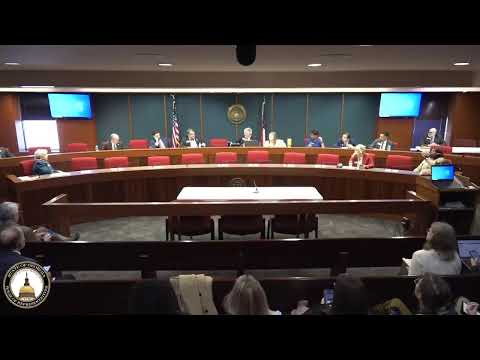
House Governmental Affairs Committee adopts rules, trims feasibility-study language and sets subcommittee structure
Summary
The House Governmental Affairs Committee adopted its rules by voice vote at its organizational meeting, removed a provision naming specific institutions for feasibility studies of proposed cities, and established two standing subcommittees with preliminary schedules and chairs.
The House Governmental Affairs Committee adopted its committee rules by voice vote at an organizational meeting on Nov. 6, 2025, and set the structure and preliminary schedules for two standing subcommittees.
Chairman Representative Eddie Lumsden said the only substantive change from last year’s rules was removing language that had specifically named universities and other entities authorized to perform feasibility studies for proposed cities, explaining some institutions had declined or delayed participation. “Last year’s committee rules, we specifically delineated universities and entities that were allowed to do the feasibility studies for proposed cityhoods. We have taken that specific language out,” Lumsden said.
The change was adopted as part of the full rules package after a motion and second; a voice vote was taken and the chair declared the rules adopted. The record does not show a roll-call tally. The chair described quorum as six members for the committee.
Lumsden also highlighted Item 13 of the committee rules, which outlines the process to create a city in Georgia. He said an author has prepared a bill that would move that process from committee rules into state code, and he expects to present the bill to the committee within one to two weeks. "It also exists in the senate, corresponding committee rules. We do have a bill that is being worked on ready now that will take it out of committee rules and actually put it in code," Lumsden said.
The committee named two standing subcommittees. The Election Subcommittee will be chaired by Representative Rob Leverett with Vice Chair Houston Gaines. The State and Local Government Subcommittee will be chaired by Representative Brad Thomas with Vice Chair Representative Steven Sainz. Subcommittees are scheduled for Tuesdays, proposed 1–3 p.m., with the full committee to meet on Wednesdays in the same room at the same time unless otherwise noted. The chair said early-week meetings may be shortened or run concurrently depending on bill volume and room availability.
Representative Steven Sainz asked whether ex officio members of subcommittees would have voting privileges; Lumsden replied that the committee follows House rules and that ex officio members would be voting members. Members raised scheduling conflicts with other committees; the chair asked members to raise conflicts offline so adjustments could be made.
For tracking and scheduling, the committee will use a bill hearing request form distributed by administrative assistant Chelsea Bell and available from staff member Molly in electronic or hard-copy form. Lumsden said the committee will generally try to handle testimony in subcommittee but reserved the right to bring bills directly to full committee depending on timing and discussions with bill authors.
The meeting was short and organizational in nature; the chair adjourned after outlining the rules, subcommittee assignments and the schedule. The committee will begin hearings the following week.