Citizen Portal
Sign In

Russification, Putin essay cited as threats to Belarusian identity at U.S. Helsinki Commission hearing

Commission on Security and Cooperation in Europe (U.S. Helsinki Commission): House Commission · July 8, 2025

Loading...

AI-Generated Content: All content on this page was generated by AI to highlight key points from the meeting. For complete details and context, we recommend watching the full video. so we can fix them.

Summary

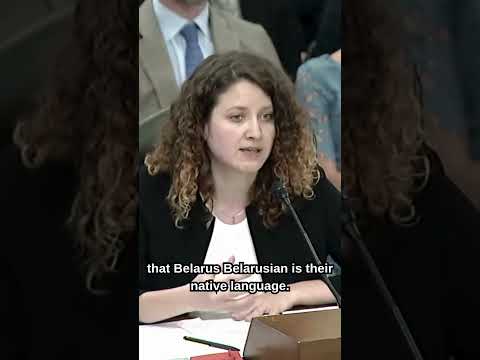
An unidentified witness told the U.S. Helsinki Commission that Vladimir Putin’s 2021 essay and long-standing Russification policies threaten Belarusian nationhood, citing a fall in Belarusian-language identification and underground efforts to revive the language since 2020.

An unidentified witness at a hearing of the Commission on Security and Cooperation in Europe said Vladimir Putin’s 2021 essay questioned the nationhood of both Ukraine and Belarus and could be used to justify pressure on Belarus.

"The Russians are saying that Belarusians are our brothers. Right? So that's, I think, the, ambition that Putin also has. They neither consider Ukraine deserving its neigh nationhood nor Belarus," the witness said, referring to the essay published by Putin before Russia's invasion of Ukraine.

The witness told commissioners that Putin addressed Ukraine more directly in the essay but also mentioned Belarus and that the essay could be invoked in future Russian policy toward Minsk. The witness added that Belarusian leader Alexander Lukashenko is currently "so dependent and so such an ally" of Russia that, in the witness's view, Putin "does not have any any any territorial wishes" at the moment, though the witness said "that might change."

The hearing account emphasized long-term language and identity trends in Belarus. "That has been happening in Belarus for decades, not because of Putin, but because of Lukashenko," the witness said, arguing that the share of people reporting Belarusian as their native language "decreased. So from almost 90, that number decreased to less than 60, and that continues to happen." The witness described the decline as "really dangerous."

At the same time, the witness said there has been a recent revival of interest in Belarusian, especially since 2020 and more markedly in 2022. "People want to learn Belarusian. And that's really interesting. They do it in underground schools, of course, unofficial, sort of classes," the witness said, calling the underground instruction "a sign of resistance" and evidence that "people want to rediscover their their identity."

The witness recommended supporting Belarusian civil society and investing in its efforts to rediscover national identity. "And that's 1 of the directions and, ways how to support Belarus' sensible society to invest in their efforts to, to discover national identity," the witness said.

No motions or votes were recorded in the provided excerpt of the hearing.