Get Full Government Meeting Transcripts, Videos, & Alerts Forever!
Get email alerts on the Capital Plan topic
No spam. Unsubscribe anytime.
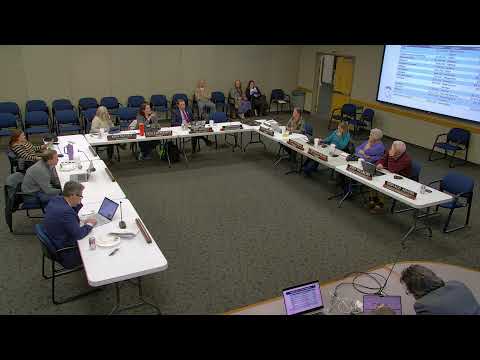
Granite School Board hears capital‑plan update; staff cite deferred‑maintenance gap and several funding options
Summary
District staff told the Granite School Board that the 2017 capital strategy is still viable but that construction‑cost spikes and other pressures forced project delays and left a multi‑million‑dollar deferred‑maintenance gap.
District staff told the Granite School Board that the 2017 capital financing strategy remains viable in the long term but that rising construction costs, supply issues and timing constraints forced project delays and created pressure on routine capital spending.
Todd, a district staff presenter, summarized the district’s prior facility condition assessment (FCI), the phasing that underpinned the 2017 bond and the hybrid financing approach adopted then: bond proceeds for named projects and a pay‑as‑you‑go capital levy to fund ongoing remodels and improvements. He explained the plan’s mechanics: as bonds are paid off, the district planned to move debt‑service capacity into the capital fund and “hold the combined rate steady” to capture property valuation growth for future capital needs. Todd noted that relabeling revenue triggers a truth‑in‑taxation process because the budgeted yield changes.
Staff showed updated cost forecasts, saying producer‑price and labor indexes spiked in 2021–23, then moderated; revenues improved because of higher investment returns. Even so, real‑world cost and schedule pressures required shifting many projects out years. Under current 2024 projections, roughly $50 million of property‑tax revenue is committed to the pay‑as‑you‑go process and about $22 million remains for other capital needs; after existing allocations (IT, equipment, police, school allocations) the net available for one‑off facility projects is about $9 million for 2024. Todd told trustees the inventory of requests runs far above that figure — a snapshot of requests exceeded $65–70 million, leaving an approximate deferred‑maintenance shortfall the board discussed at roughly $58 million.
Staff presented options. They recommended first reassessing project timing against updated costs and revenues so the board can determine which projects could shift forward without changing the overall plan. Other choices include revisiting design guidelines (reducing capacity or altering building standards), moving projects off the active list if closed schools no longer need rebuilding, pursuing another bond proposition, using available capital‑levy headroom (subject to statutory caps), issuing lease‑revenue bonds as a cleanup tool (noting federal scrutiny of tax‑exempt municipal debt could change costs), or formalizing a process for leasing or selling surplus properties.
Trustees pressed staff on several topics: whether the earthquake work changed FCI scores (staff recommended a full reassessment to be certain, noting some schools like Eisenhower saw improved structural ratings after repairs); whether reordering projects would breach promises made in the bond campaign (staff answered that many projects share the same scheduled year and limited timing adjustments are possible without changing the overall sequence); and whether unreinforced masonry or seismic needs create immediate safety risks (staff said seismic improvements were called out in the bond and that a comprehensive seismic‑only program would require a very large bond and face construction‑capacity limits).
The board discussed the recently passed security/safety legislation. Staff said final implementation specifications are still being developed, that state dollars might offset part of the cost, but that the law could add tens of millions to the district’s needs and recommended waiting until after the legislative session to adopt major plan changes.
Several trustees urged the board to consider increasing recurring capital allocations rather than relying solely on project‑by‑project pay‑as‑you‑go funds. Board members cited safety, facility condition, teacher retention and competition with newer charter facilities as reasons to reduce the deferred‑maintenance backlog. Todd and staff responded that they will update cost estimates, reassess timing and could return with scenario options; staff also recommended community engagement before making substantive list changes or new revenue requests.