Get Full Government Meeting Transcripts, Videos, & Alerts Forever!
Get email alerts on the Affordable Housing topic
No spam. Unsubscribe anytime.
Spokane mayor unveils HEART Fund renaming and four measures to spur affordable housing
Summary
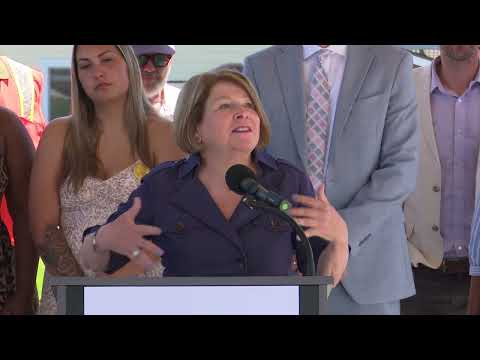
Mayor Lisa Brown announced a package of four proposals at Liberty Park intended to expand affordable housing supply and reduce development barriers.
Mayor Lisa Brown announced a set of four proposals at a Liberty Park event to increase housing supply in Spokane, emphasizing a mix of local, state and federal tools that officials say will expand affordable housing and speed construction.
Brown said the Liberty Park project includes 54 new units and "utilizes $4,000,000 from the heart fund," and described the measures as part of the citys broader goal to create more than "22,000 new housing units in the city by 02/1946" as stated at the event. She listed partners on the project including Proclaim Liberty, Habitat for Humanity, Take Up the Cause and the Spokane Low Income Housing Consortium.
The four proposals described by Brown were: updating and aligning the local tenth-of-a-cent sales-and-use tax authorized under House Bill 1590 with the city's housing goals and renaming it the Housing Equity and Attainable Residents Trust (HEART Fund); an affordable housing permit fee deferral program that would allow certain affordable-housing projects to defer up to $150,000 in building and street permit fees until later in construction; a city-led update of the unified development code to make regulations consistent with the comprehensive plan; and a public-rule change to allow waiving general facilities charges (GFCs) for qualifying affordable projects, leveraging recent state legislation.
"This project utilizes $4,000,000 from the heart fund that we're gonna talk about in just a minute," Brown said. She added the ordinance to align the HB 1590 levy would bring the City Council into the priority-setting process earlier in the year and establish funding deadlines to better leverage state resources, such as the Housing Trust Fund.
State Sen. Marcus Richeli (Third District), who joined the event, praised the cross-partisan, community-driven approach and linked stable housing to health: "But for me, someone who works in the healthcare space and works in a lot of healthcare policy, a home is really healthcare." Richeli also credited the Spokane Low Income Housing Coalition and Habitat for Humanity for helping shape legislation that he said lets municipalities waive certain fees for affordable housing.
Daniel Roberts of the Spokane Alliance described the HEART effort's roots at West Central Abbey and said the fund reflects several years of community organizing and advocacy: "Heart is the investment of citizens and immigrants. Heart is the values of our faith communities."
Michelle Girardot, CEO of Habitat for Humanity Spokane, called the HEART Fund "historic" and said deferred permit payments and GFC waivers will help smaller developers and preserve permanently affordable homes. "Deferred permits. We talk a lot about cash flow. Cash flow is a tough thing, to make all these things pencil out," Girardot said.
On details and next steps, Planning Director Spencer Gardner said the permit-fee deferral is primarily a timing change: fees would be pushed to the point of a certificate of occupancy so developers can begin construction before making those payments. "This is really just changing the timing," Gardner said. He also said the city is preparing a nationwide request for proposals for code-development expertise and plans to update the unified development code concurrent with the comprehensive plan, which is due at the end of 2026.
Brown acknowledged questions about fiscal impacts and funding sources. In response to whether waived GFCs would shift costs to market-rate projects, Brown said the city expects to spread costs through the system and seek efficiencies from higher construction volume and streamlined code, but she did not provide a specific fiscal model at the event.
The mayor asked for continued advocacy with state and federal partners, noting uncertainty about federal funding levels and thanking local advocates, nonprofits and faith communities for ongoing work. On a separate funding timeline question, Brown said ARC award notifications would go to the city council briefing committee on Monday, July 14.
No formal vote or ordinance adoption occurred at the announcement. Brown and city staff said the measures will move through the City Council and administrative rulemaking processes for further public input and legislative action.