Get Full Government Meeting Transcripts, Videos, & Alerts Forever!
Get email alerts on the Transit Oriented Development topic
No spam. Unsubscribe anytime.
MBTA pitches 5‑acre development parcel at former Lakeville station; residents press for commercial uses and outreach
Summary
MassDOT/MBTA and Greystone described a concept to make roughly five acres near the former Lakeville station available for development while retaining about 200 parking spaces; Select Board members and residents urged town outreach and emphasized preference for commercial destinations over additional housing.
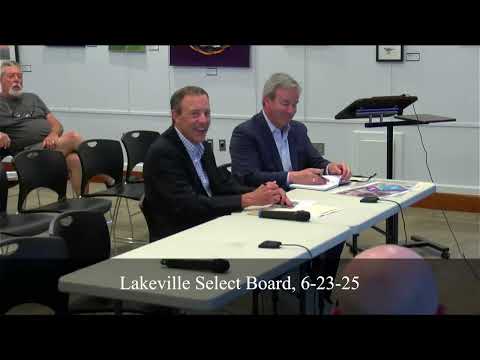
MassDOT/MBTA officials met with the Town of Lakeville Select Board on June 23 to discuss a proposal to make roughly five acres of MBTA property near the former Lakeville station at 125 Commercial Drive available for development while retaining about 200 parking spaces for transit use.
Scott Bosworth, chief development officer for MassDOT/MBTA, said MBTA staff and their real‑estate consultant Greystone had identified an area they believe could be developed without affecting operations. "We think it's a really nice site for something to happen there, as opposed to sitting... dormant," Bosworth said, describing the project as an opportunity to test market interest with a Request for Information (RFI) before any formal solicitation.
Tom Cox of Greystone said the agency's concept deliberately keeps new development away from the active commuter rail line and would maintain the commuter pick‑up/drop‑off, platforms and the 200 parking spots. "We're also proposing to maintain 200 pocket spots there, to support the... CapeFlyer as well," Cox said, adding MBTA officials favor using the existing shared access drive rather than adding a new curb cut.
Town officials and residents pressed MBTA representatives on several points. Select Board members asked about timing and public engagement; MBTA staff said there is no firm deadline and said they are open to holding community meetings and testing market interest with an RFI rather than moving directly to an RFP. The board and MBTA tentatively set a target of a mid‑August survey and a September in‑person public session to gather community input.
Multiple residents and board members stressed a local preference for commercial uses — a grocery store, sit‑down restaurants and other destination businesses that would keep spending in town — rather than additional housing. "Housing is not something that the people of Lakeville are actively looking to their select board to add more to," one Select Board member said. Speakers cited recent and pending housing projects nearby and expressed concern about impacts on schools, town budgets and services.
Technical constraints featured in the discussion. Residents and MBTA staff noted limited sewer availability in the area and Title 5 septic limitations; commenters said higher density development would likely require a package wastewater treatment plant or other off‑site infrastructure. MBTA staff acknowledged site attributes — accessibility, zoning, water and sewer capacity — shape what is feasible.
Several residents suggested mitigation approaches if housing were pursued, including transfer of development rights or dedicated preservation funding that would conserve open land elsewhere in town. MBTA representatives said they are open to creative terms and could consider community priorities when drafting an RFI or later an RFP. The MBTA also clarified that private development on leased MBTA land would be subject to local zoning, permits and property taxes; a developer on leased MBTA land would not inherit MBTA's tax‑exempt status.
Other public comments asked for state assistance to remediate the nearby Lakeville Hospital site to enable broader commercial redevelopment opportunities. MBTA staff said they had not engaged the market and would use outreach and a market test to measure interest.
Next steps agreed at the meeting included coordinated community outreach led by MBTA and town staff, a survey targeted for mid‑August and an in‑person public session in September; the town offered to provide a verified email list to help validate survey responses. The MBTA indicated it would not sell the land outright in the near term and favors leasing arrangements or long‑term leases as a likely path for development partnerships, while retaining control of the underlying fee interest.
The meeting closed after routine business. The board and MBTA said they will continue discussions and use the planned outreach to refine an RFI that reflects both community objectives and market realities.