Get Full Government Meeting Transcripts, Videos, & Alerts Forever!
Get email alerts on the Health Diabetes topic
No spam. Unsubscribe anytime.
Senate Appropriations hearing spotlights Special Diabetes Program as advocates press Congress to renew research funding
Summary
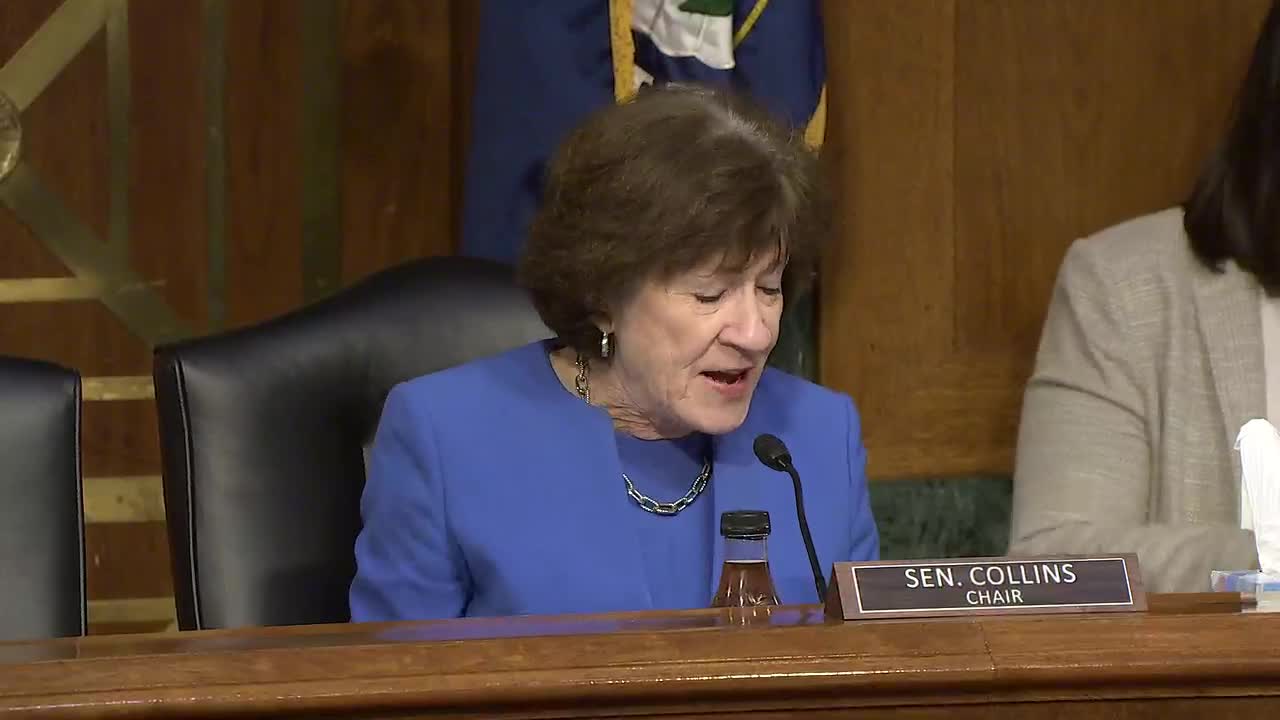
Chairwoman Susan Collins convened the hearing and welcomed more than 170 advocates from Breakthrough T1D’s Children’s Congress, saying the NIH Special Diabetes Program must be extended before its September expiration.
Chairwoman Susan Collins convened the Senate Appropriations Committee hearing and welcomed more than 170 delegates from Breakthrough T1D’s Children’s Congress, introducing three young witnesses and Dr. Griff Rogers, director of the National Institute of Diabetes and Digestive and Kidney Diseases (NIDDK).
The most urgent message from the panel was that continued federal funding for the Special Diabetes Program (SDP) is needed to sustain recent clinical advances and to support trials now aiming at prevention and biological cures. Chairwoman Collins said the SDP “must be extended” before it expires in September and urged advocates to ask members to cosponsor reauthorization legislation she and Senator Jeanne Shaheen introduced.
Why it matters: SDP-supported research has led to multiple practical advances cited in testimony: FDA-authorized artificial pancreas systems that have become standard of care for many people with type 1 diabetes, an FDA-approved preventive therapy (teplizumab) that can delay clinical onset by about three years in treated individuals, and early clinical results from cell-replacement trials that, in one report cited by Collins, left 10 of 12 participants off insulin after one year. NIDDK Director Dr. Griff Rogers described work on encapsulation, immune-protection of transplanted cells, and complementary industry trials building on SDP-supported science.
What the witnesses said: Ruby Whitmore, 16, told the committee, “Managing type 1 diabetes isn't something I ever get a break from,” and described how continuous glucose monitors (CGMs) and insulin pumps, enabled by research investments, allow her to pursue sports and academic goals. Rachel White, also 16 and a nationally ranked junior tennis player, described an initial presentation with blood sugar over 600 and said the SDP’s work “is the reason we have better devices, smarter insulin pumps, and more hope than ever.” Katie Bone, a professional climber and American Ninja Warrior competitor, credited CGMs and pumps with making elite competition possible and urged Congress to renew the program.
Budget and grants concerns: Several senators, including Vice Chair Patty Murray and Senators Dick Durbin and Tammy Baldwin, raised alarms about administration actions that have frozen or terminated NIDDK grants and about a proposed NIH budget that would reduce funding relative to recent years. Vice Chair Murray said the Trump administration is “terminating or freezing more than 260 grants from the NIDDK” and urged advocates to push back. Dr. Rogers said some terminations are the subject of appeals or litigation and emphasized NIDDK’s effort to prioritize ongoing, promising clinical trials.
Equity and reach: Senators noted SDP and related programs’ impact on American Indian and Alaska Native communities and the 54 percent reduction in new diagnoses and decline in complications attributed to the Special Diabetes Program for Indians (SDPI). Dr. Rogers described SEARCH and SDPI collaborations and said SDP-supported work is expanding to populations (pregnant people, low-income communities) where industry trials have been limited.
Research pipeline and timeline: Dr. Rogers highlighted long-running cohort studies (TrialNet; TEDDY/TEDD; GoMoms) and said those efforts are yielding biomarkers and early indicators that can support prevention trials. He called cellular therapies and immune-modulation approaches “extremely exciting,” noted ongoing work to adapt CAR T–type approaches from oncology, and said further results from major studies are expected in the coming months to years.
What lawmakers can do: Several senators asked for sustained appropriations and for colleagues to cosponsor reauthorization of the SDP. Chairwoman Collins left the hearing record open for additional submissions and said she and Senator Shaheen had already filed reauthorization language for the program.
The hearing closed with Collins thanking witnesses and recalling the transition from early heavy insulin pumps to today’s CGMs and automated insulin delivery systems as evidence that federal investment yields durable advances.