Get Full Government Meeting Transcripts, Videos, & Alerts Forever!
Get email alerts on the Policy 30 topic
No spam. Unsubscribe anytime.
NVTA advisory committee backs policy barring use of regional funds to cover project cost overruns, sets narrow petition option
Summary
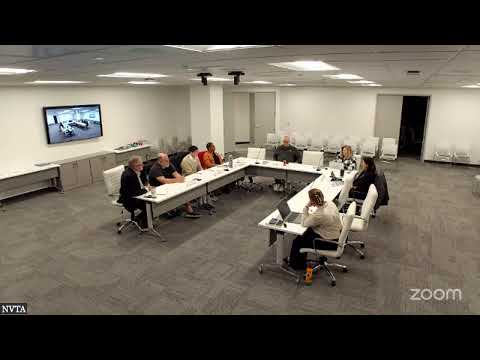
The Northern Virginia Transportation Authority Technical Advisory Committee voted Jan. 15, 2025, to recommend that the Authority adopt a policy prohibiting the use of regional revenue fund allocations to cover project cost underestimates or overruns, while creating a narrowly drawn petition process for rare, extraordinary circumstances.
The Northern Virginia Transportation Authority Technical Advisory Committee voted Jan. 15, 2025, to recommend that the Authority adopt a policy prohibiting the use of regional revenue fund allocations to cover project cost underestimates or overruns, while creating a narrowly drawn petition process for rare, extraordinary circumstances.
The recommendation, presented by staff member Mr. Longhey, aims to preserve the Authority's program evaluation integrity by preventing after‑the‑fact transfers that could alter the relative ranking of projects. "The purpose of this policy is to establish that project risks due to cost underestimates and or cost overruns will not be absorbed by the Northern Virginia Transportation Authority," Longhey said during the meeting. He added that the draft policy would "not allow the transfer of authority regional revenue fund project funding between projects."
The nut of the proposal is a two‑part approach: a default rule of no transfers plus a petition process that petitioners must meet only in "unique, extraordinary and circumstance[s] that could not have been anticipated," according to Longhey. He described the petition bar as deliberately high, saying petitions "will be examined rigorously" and that staff and outside consultants may be used to vet claims at the project sponsor's expense.
Staff told the committee that transfers since the Authority began have been relatively limited (less than $100 million, staff said) but that a back‑of‑the‑envelope estimate of potential exposure from underestimates and overruns across the pipeline could approach roughly $1 billion. "We're typically running 600 some million in a 2 year update. So a billion dollars would basically almost void 2 two‑year updates of new projects," Longhey said, framing the fiscal risk to the regional program.
Under the proposed process, petitions would be submitted to the MBTA Chief Financial Officer and staff (the transcript records the CFO as Monica and references staff lead Keith) and would be evaluated as part of the next available two‑year update to the Authority's six‑year program. Petitions received after a call for projects would not be reviewed until the following cycle, staff said. Petitions judged to lack sufficient information would receive a "no finding" recommendation and could delay or defer funding until the next update.
The draft policy also allows the Authority to hire independent outside consultants to assess petitions; the cost of any such consultant work would be charged to the project sponsor. Staff said the petition review's timeline will depend on the promptness and completeness of sponsor responses and that a failure to provide adequate documentation is likely to result in a recommendation of no.
Committee members questioned how often past requests might have qualified under the proposed standard; Longhey said most past requests would not have met the high threshold. He reiterated that staff historically recommended against funding overruns based on precedent and that the policy is intended to put that position into a formal rule while preserving a narrowly defined avenue for true exceptions.
The committee voted unanimously to recommend adoption of the proposed policy to the Authority. The transcript records the motion passing with no recorded opposition. The Authority is scheduled to consider Policy 30 at its Feb. 13 meeting.
Votes at the meeting included approval of the Nov. 20 meeting minutes and the 2025 meeting schedule (both approved without opposition) and the committee's unanimous recommendation that the Authority adopt Policy 30 as drafted.
Staff also briefed the committee on the 2025 work calendar: an anticipated call for regional projects around May 1, 2025 (the portal and application period will follow), ongoing work on a preliminary deployment plan for regional bus rapid transit with analytical results expected in March and a target of July for authority approval of a preliminary deployment plan, expanded transportation‑technology activities and continued participation in the regional multimodal mobility program (RM3P). Staff noted new branding materials and said the Authority's next meeting is Feb. 13, 2025.
This report is based on the NVTA TAC transcript of the Jan. 15, 2025 meeting. Exact wording in quotations matches the meeting transcript where speakers are identified.