Get Full Government Meeting Transcripts, Videos, & Alerts Forever!
Get email alerts on the Micromobility topic
No spam. Unsubscribe anytime.
Carmel committee begins redraft of micro-mobility rules, focusing on speed, definitions and enforcement
Summary
City staff proposed defining "micro-mobility" by size and top speed to simplify enforcement, police described recent towing and citation efforts on the Monon Trail, and residents urged outreach to youth and bike shops as the committee directed legal research on age-based regulation and behavior standards.
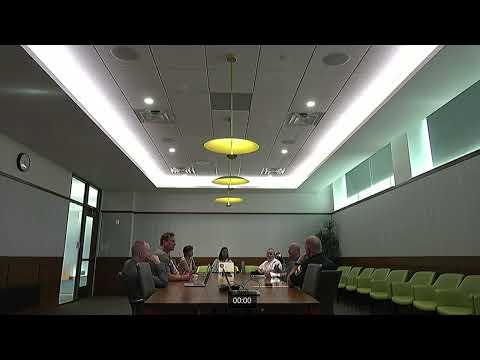
Carmel's Land Use and Special Studies Committee on July 9 opened a focused discussion on drafting a new city ordinance to regulate micro-mobility devices such as e-bikes, e-scooters and other electric personal conveyances.
Transportation Systems Administrator David Littlejohn told the committee that state law already classifies e-bikes under a three-class system but does not define many other devices that have proliferated on paths and trails. "Historically... it's considered a motorized vehicle because we don't have any other definition for something like that," Littlejohn said, explaining the difference between e-bikes (treated as bicycles under state classes) and throttle-equipped scooters and skateboards that lack a state category.
The discussion centered on two practical goals: create a city definition for "micro-mobility" that can encompass new devices as they appear, and set clear, enforceable speed and size limits. Littlejohn and police representatives said defining the category by maximum speed and physical size would allow officers to enforce behavior more consistently than attempting to identify every device make or model. Littlejohn described the framework: exclude mobility aids (battery-powered wheelchairs) and devices that exceed the lawful speed thresholds; devices that use a throttle and exceed the set speed would be barred from multiuse paths.
Police described stepped-up enforcement on the Monon Trail and other corridors, including use of park resource officers, towing of gasoline-powered mini-motorcycles and citations. "We would or have the option to tow the vehicle off of the Monon," a police representative said, adding that parents are sometimes called to retrieve impounded devices and that officers have increased patrols this summer.
Residents and committee members emphasized pairing enforcement with outreach. Councilor Theresa Ayers and others urged a combined education-and-enforcement push using social media, schools and partnerships with local bike shops. A youth speaker, Carmel resident Jack Felton, told the panel that many affordable e-bikes popular with teens are modified to run far above factory limits and said outreach should target the "status" appeal that makes high-speed models desirable. "They all have throttles," Felton said, describing how some models are altered to reach higher speeds.
Committee members also discussed practical questions about posting and enforcing speed limits on multiuse paths. The Monon Greenway already carries a 15-mph limit; staff noted it is difficult to sign every path consistently and suggested exploring default statutory speed rules and targeted signage where needed. Technology to measure speeds — including a city pilot camera that reports passerby speed — was noted as available but accuracy must be validated before relying on it for citations.
Police asked the committee to consider behavior-based language in addition to numeric speed caps, pointing out that current roadway reckless-driving standards do not translate directly to path use. The committee asked legal staff to research whether municipal rules can treat minors differently for modification or helmet requirements and to examine possible regulation of sales or modification through local shops.
Members identified immediate next steps: draft a micromobility definition tied to size and speed (with explicit exclusions for mobility aids and high-powered e-motorcycles), craft enforceable path-responsible behavior language, coordinate education and signage strategy, test detection technology for accuracy and have legal staff research age-based regulation and shop outreach options. No formal votes or ordinance adoptions occurred at the meeting.
The committee agreed the work will continue in subsequent meetings with staff-directed research and draft language development.