Get Full Government Meeting Transcripts, Videos, & Alerts Forever!
Get email alerts on the Human Trafficking topic
No spam. Unsubscribe anytime.
California Senate approves bill increasing penalties for buyers of sex with minors; foes warn loitering provision risks discriminatory policing
Summary
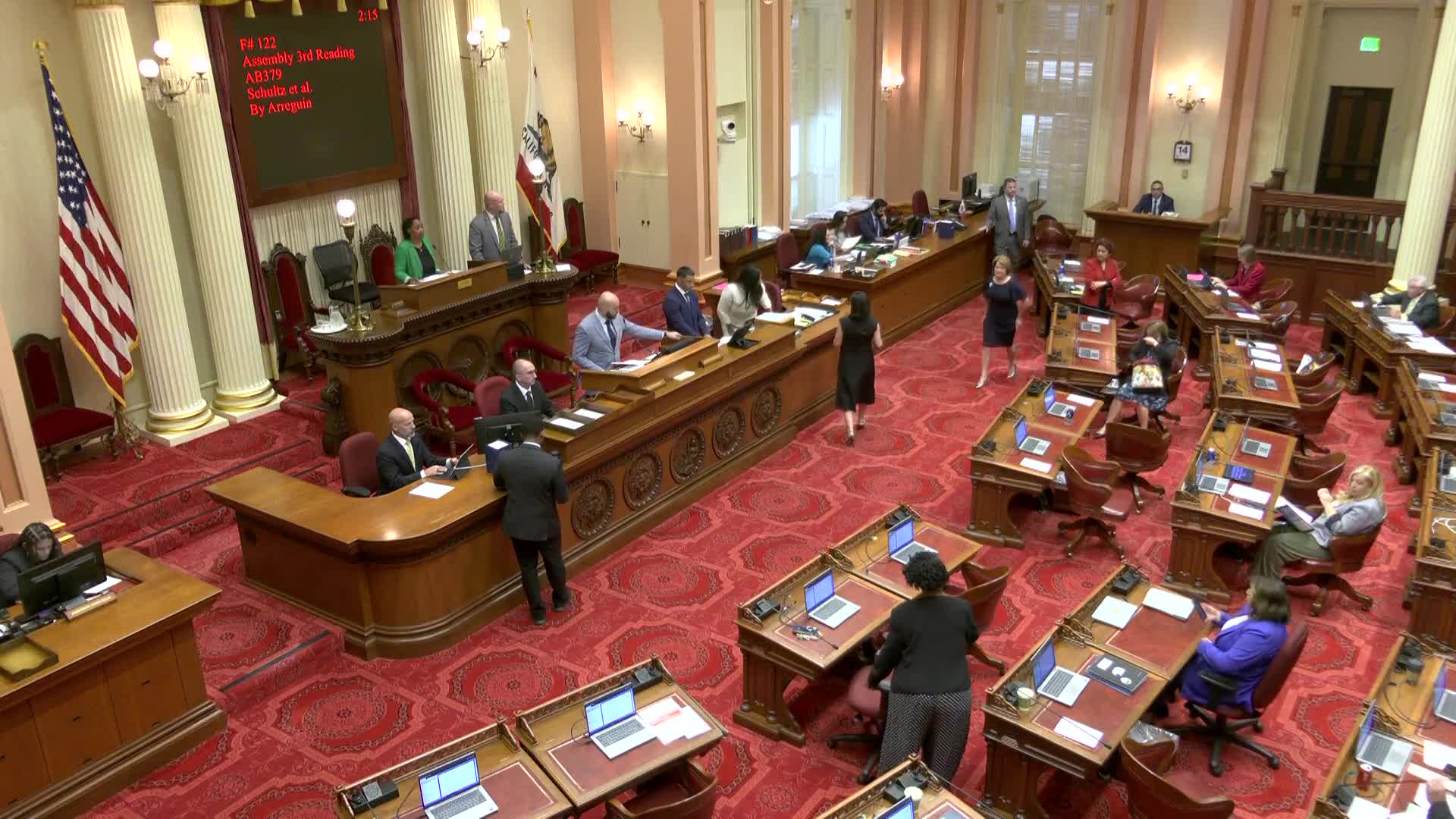
The California State Senate on Tuesday passed Assembly Bill 379, which increases penalties for adults who solicit minors for commercial sex, creates a survivor support fund and adds enforcement tools for prosecutors, while prompting sustained debate over a loitering-with-intent provision that some senators warned could enable discriminatory policing.
SACRAMENTO — The California State Senate on Tuesday passed Assembly Bill 379, a measure that increases criminal penalties for adults who solicit minors for commercial sex, establishes a survivor support fund for victims and creates new enforcement tools for prosecutors while adding a loitering-with-intent provision that several senators said risks discriminatory application.
The bill, carried on the floor by Senator Aragon on behalf of Assemblymember Maggie Crowell and others, authorizes felony punishment for solicitation of a minor by an adult more than three years older than the minor, creates a misdemeanor offense for loitering with the intent to purchase commercial sex, and includes civil penalties for hotels and motels that "deliberately look the other way" on trafficking, according to the bill summary presented on the floor. The author and supporters also said the bill directs funds to community-based organizations that serve survivors.
Supporters framed the measure as a tool to reduce demand and to expand services for survivors. "These kids are not criminals," said Senator Valadares, urging passage and describing the bill as a way to hold buyers accountable and to funnel fines to front-line nonprofits. Senator Grove recalled prior efforts (including SB 14 and SB 1414) to address buyers and said solicitation protections for 16- and 17-year-olds are long overdue.
Several senators — including Senator Dr. Weber Pearson, the chair of the California Legislative Black Caucus — warned the loitering provision could replicate the harms of past vagrancy and loitering statutes. "Loitering laws have a long and troubling history rooted in post-slavery black codes and Jim Crow era policies," Weber Pearson said on the floor, arguing that vague loitering standards give law enforcement broad discretion to stop and arrest people based on appearance or presence rather than conduct. Senator Wiener and others recalled the recent repeal of loitering statutes intended to curb discriminatory enforcement and said the new language could reintroduce subjectivity into policing.
Senators who supported the bill told colleagues they recognized the concerns and pledged to pursue cleanup amendments. "There is no doubt sadly that these laws have been used in a way that's been discriminatory," Senator Aragon said, noting the author and committee chairs intend to engage further on tightening the loitering language while defending the bill's survivor supports and solicitation penalties.
Supporters pointed to law enforcement and municipal practices they said would be aided by the bill. Senator Rubio recounted local police data showing rescues of suspected trafficking victims that he said were possible because officers could stop and question suspicious conduct; he said those interactions have at times led to saving teenagers from trafficking.
The bill drew endorsements the author cited from several major cities and organizations, including the mayors of Long Beach, San Jose, San Diego, Sacramento, Bakersfield and Fresno, the League of California Cities, and the California District Attorneys Association. Assembly passage was unanimous, Aragon noted.
On procedural matters, multiple senators said they had sought amendments to narrow loitering language during committee work and floor negotiations; at least one senator said chairs declined some amendments. The author and other floor leaders characterized AB 379 as an incremental step that can be refined in future amendments while the core solicitation and survivor-support provisions remain in force.
Votes at a glance
AB 379 (Schultz) — Passed: Senate recorded the vote on the floor session; clerk announced the measure passed and the author asked for an "aye" vote. The bill creates felony penalties for solicitation of minors by adults more than three years older than the minor, establishes a survivor support fund, and adds a misdemeanor loitering-with-intent-to-purchase-commercial-sex offense; supporters said it also creates civil and criminal accountability for businesses that enable trafficking. Outcome: approved (floor vote announced as passed). Author: Assemblymember Maggie Crowell (original author), presented on the floor by Senator Aragon. Notes: supporters and the author committed to continued discussions and possible cleanup amendments to the loitering language.
SCR 78 (Maguire) — Passed: a concurrent resolution designating a North Bay highway as a memorial for three Sonoma County Sheriff's Office members who died in the line of duty; passed by recorded voice/roll call on the floor. Outcome: approved.
Speakers quoted in this report are drawn from the Senate floor transcript. Direct quotations appear in context and are attributed to the senator who spoke them.
What the bill does and what remains unsettled
AB 379 elevates solicitation of certain minors to felony-level penalties when the buyer is more than three years older than the minor, creates a survivor support fund funded in part by fines and penalties, and authorizes new prosecutor tools and civil penalties for businesses that facilitate trafficking. The bill also includes a loitering offense defined as loitering in a public place with the intent to purchase commercial sex. Supporters argue the loitering language is necessary to give officers an evidentiary basis to intervene early in trafficking situations; critics say the loitering standard is subjective and risks renewed racial and LGBTQ-based overpolicing unless tightened.
Background and context
The floor debate referenced prior legislative work on trafficking, including SB 14 and SB 1414 (efforts to pursue buyers and create enhanced trafficking penalties) and the repeal of prior loitering provisions in SB 357, which was enacted to address abuses of loitering laws. Senators repeatedly emphasized survivor testimony and long-running advocacy by survivor leaders as central to advancing the bill.
What happens next
With floor passage, AB 379 moves forward in the legislative process. Senators and the author said they expect continued negotiations over the loitering language and potential amendments in subsequent legislative steps.
Sources and attribution
This article is based on the public record of the California State Senate floor session, including the bill reading, floor debate, and roll-call announcement included in the official transcript. Direct quotes are attributed to the senators who spoke on the floor.