Get Full Government Meeting Transcripts, Videos, & Alerts Forever!
Get email alerts on the Juvenile Justice Youth Programs topic
No spam. Unsubscribe anytime.
Guadalupe Teen Court presents program outcomes and seeks board support for expansion
Summary
Guadalupe Teen Court's executive director detailed the community-based restorative-justice diversion program's structure, outcomes and volunteer opportunities, saying the court has adjudicated roughly 375 cases and relies on youth volunteers from Tempe Union campuses. The director asked the board for letters of support and community connections.
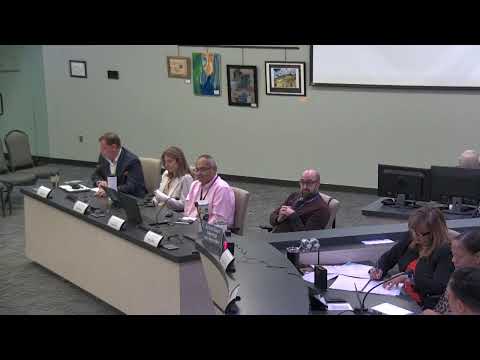
Reyna Tevina, executive director of Guadalupe Teen Court, presented an overview of the community diversion program, its restorative-justice model, volunteer training and program outcomes, and asked the Tempe Union governing board for support and community partnerships.
Tevina described Guadalupe Teen Court as a community-based peer court founded in 2015 that uses a restorative approach to respond to first-time juvenile offenders and status offenses. She said the program works in partnership with the Maricopa County Juvenile Probation Department and the Organizing Institute for Democracy. Volunteers, typically ages 13 to 18, serve in courtroom roles such as judge, attorney, victim advocate and jury, and defendants who complete assigned restorative consequences generally have records expunged after meeting requirements within a 60-day period.
Tevina told the board the program had adjudicated about 375 juvenile cases (number based on November reporting and noted as likely higher now) and enlisted more than 70 volunteers from Guadalupe, Tempe and surrounding areas, with many volunteers attending Tempe Union campuses including Marcos Niza and Tempe High. She said cases are typically heard the fourth Tuesday of each month at community locations; the program is currently holding hearings at South Mountain Community College. Program activities for volunteers include civic-engagement opportunities, field trips and statewide teen-court summits; Tevina noted the program previously took students to Washington, D.C., on funded trips in 2016, 2017 and 2019.
Board members praised the program and offered to help. Board member Hodge offered to provide a letter of support from the city council member and other community contacts. Board member Gutierrez Miller praised the program's educational impact and quoted Tevina's line: "The more you know about the courts and the justice system, the less likely you are to fall into it." Tevina requested letters of support and community outreach to help recruit participants and fund program activities.
The presentation was informational; the board did not take formal action beyond offering support and suggesting a possible site visit or partnership to host a Teen Court event on a Tempe Union campus.