Get Full Government Meeting Transcripts, Videos, & Alerts Forever!
Get email alerts on the Main Street Funding topic
No spam. Unsubscribe anytime.
Downtown business owners and Main Street ask Leavenworth Commission to increase funding for economic revitalization
Summary
Business owners and Main Street leaders told the commission that the downtown revitalization program is underfunded; speakers cited a documented 21:1 return on the city's $56,000 investment and requested raising the allotment to $125,000 and considering transient guest tax funds for economic development.
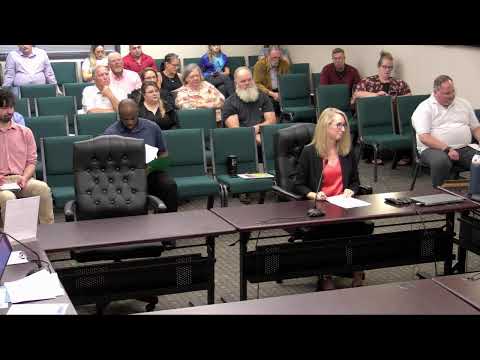
Several downtown business owners, Main Street volunteers and the Main Street executive director addressed the commission to urge increased funding for downtown economic development.
Rusty Hopper, a business owner at 1116 North Broadway, said the city should consolidate local business programs — the Chamber of Commerce, Main Street and the visitor program — into a single, better‑funded program to save money and focus resources. "There's no reason the city can't incorporate that into one program. Save money. Put all that money in one bucket," Hopper said.
Renee Chaput Lemons, who owns a downtown business at 223 South Fifth Street, said Main Street events increase foot traffic and tourism and warned that the current $56,000 city allocation is inadequate given rising costs. "Without Main Street, downtown will become less visible, less inviting, and less alive," she said, and urged using transient guest tax reserves to support downtown development, noting the city has "over $600,000 in just reserves."
Hailey Shaw, who said she has led Main Street for 15 months, told the commission the organization documented a 21:1 return on the city's investment and requested increasing the city's annual allotment from $56,000 to $125,000. She noted insurance and event costs have risen and cited Charter Ordinance No. 60 as allowing use of transient guest tax dollars for economic development.
Commissioners did not act on the funding request during the public‑comment period; speakers asked the commission to review transient guest tax expenditures and to consider reallocating funds toward downtown revitalization.
The request raises a budgeting question ahead of 2026 deliberations: Main Street and several business owners urged fiscal recognition of downtown economic development as a higher priority to sustain business recruitment, upper‑floor building reuse and year‑round tourism.