
CRCOG testing program, UConn research and quarry standards credited with narrowing scope of Connecticut's foundation crisis
Get AI-powered insights, summaries, and transcripts
Subscribe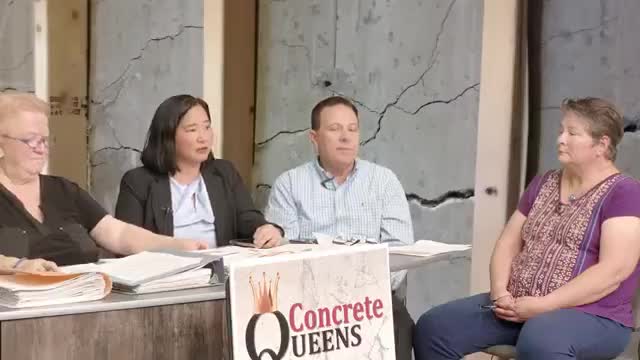
Summary
CRCOG's testing program, university engineering research and USGS mapping were central to quantifying the foundation problem; speakers said those technical steps enabled targeted funding and prompted legislation to require quarry and aggregate testing standards.
Panelists at the 10-year anniversary episode credited local regional government and academic partners with producing the technical evidence needed to design remediation programs and enforcement. Pauline Yoder, Chief Operating Officer at the Capitol Region Council of Governments (CRCOG), described CRCOG's testing program and its coordination with town assessors and building officials; UConn and Trinity provided engineering analysis; the USGS produced initial federal mapping.
Why it matters: panelists said accurate testing and mapping were prerequisites for estimating the magnitude and economic impact required for federal and state decision-making, and that quarry aggregate testing and enforcement closed critical policy gaps.
Testing program design and administration: Yoder said the governor established a testing program that CRCOG was chosen to administer because of the council's regional convening role. Towns used HUD CDBG funds early on to support testing. The CRCOG program prioritized samples and tests needed to determine whether homes contained reactive aggregate. Yoder noted that most awards under the program were focused on structural repairs (to obtain occupancy), not on living or relocation costs.
Research, mapping and quarry oversight: panelists credited UConn's School of Engineering with conducting studies to clarify the chemistry and mechanism of aggregate deterioration; speakers also said Canadian researchers provided early practical guidance. The USGS participated in federal mapping of affected areas, which helped target outreach and testing. Panelists pointed to recent legislation intended to ensure quarries and other aggregate sources are tested and brought into compliance; speakers named recent public act numbers when describing those provisions.
Remaining technical tasks: panelists emphasized ongoing enforcement of quarry and aggregate testing standards and engineering monitoring of repaired structures. They also discussed planning an international conference on the topic (UConn organizing with NIST funding) to share protocols and research across affected countries.