Get Full Government Meeting Transcripts, Videos, & Alerts Forever!
Get email alerts on the Ems topic
No spam. Unsubscribe anytime.
Pharr EMS credits new whole-blood program for December lifesaving transfusion
Summary
Pharr EMS officials said a prehospital whole-blood transfusion on Dec. 29 stabilized a severely hypotensive patient within minutes, prompting clinical-excellence commendations for medic staff and highlighting new equipment including ambulance-carried ultrasound and Stryker stretchers.
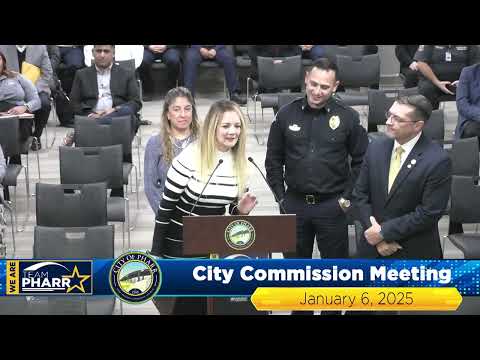
Pharr EMS Chief Daniel Ramirez said Dec. 29 that less than a month after the city began a prehospital whole-blood program, Medic 4 administered a life-saving transfusion that stabilized a patient with severe bleeding. Ramirez said the patient’s blood pressure improved from 81/40 to 123/61 after the transfusion and the patient was transported to a local hospital.
The transfusion involved paramedic Vanessa Guerrilla, advanced EMT Elsa Castillo and shift captain Andrew Gonzales; Ramirez presented the three staff members with a clinical excellence commendation for “the quick action and treatment which made a difference in this patient’s life,” he said.
Pharr officials told commissioners the whole-blood program was implemented under local EMS protocols and that Pharr is among the first providers in the Rio Grande Valley to carry whole blood. City communications posted a press video and media outreach to explain the program and eligibility criteria for field transfusion.
Ramirez described complementary clinical upgrades to Pharr’s emergency medical services: an ambulance-carried Butterfly IQ ultrasound on every unit, new stretchers and stair chairs obtained through an equipment exchange with Stryker, and imminent delivery of new LP 30-series cardiac monitors. Ramirez said the ultrasound enables on-scene assessments — for example, detecting internal bleeding or, when applicable, fetal cardiac activity — and improves triage and transport decisions.
A commissioner asked whether the blood supply is O positive or O negative; staff acknowledged a drafting error in initial materials and said they would correct the public information. The city also said it will archive clinical videos and training records for quality-review purposes.
Officials limited comments about protocol specifics to the meeting record; no changes to policy or budget were proposed during the presentation.