Get Full Government Meeting Transcripts, Videos, & Alerts Forever!
Get email alerts on the Voter Id Photo Requirement topic
No spam. Unsubscribe anytime.
Committee advances bill requiring photo ID for voting, expedites repeal of Medicare/Medicaid cards; advocates seek hardship carve-outs
Summary
The committee advanced House Bill 206, requiring that acceptable in-person voting identification include a photograph and expediting the repeal of Medicare/Medicaid cards as voter IDs to July 1.
The Corporations, Elections & Political Subdivisions Committee voted to pass House Bill 206, Elections Acceptable ID Revisions 2, which requires that acceptable forms of identification for in-person voting include a photograph and expedites repeal of Medicare and Medicaid insurance cards as acceptable ID to July 1.
Sponsor’s presentation
Representative Nina Weber, the bill sponsor, described the measure as “a straightforward bill. A simple bill. A common sense approach to identifying a person to vote in our Wyoming elections.” Weber said identification depends on recognition and that a photograph is the appropriate way to confirm the identity of a person appearing to vote. The bill specifies that acceptable IDs must include a photograph and removes Medicare/Medicaid cards from the acceptable list earlier than the previously scheduled repeal date of Dec. 31, 2029.
Secretary of State and election-administration perspective
The Secretary of State (referred to in the transcript as “Secretary of State Grama”) and staff explained that the bill “really does two things”: it expedites removal of non-photo Medicare/Medicaid cards and requires photos on the remaining forms of identification. The office said voter ID aims to prevent voter impersonation and that requiring a photo is consistent with that objective. The Secretary noted Wyoming currently is one of the few states that still formally accepts Medicare/Medicaid cards (without photos) until 2029 and said a free state voter registration card previously adopted by the legislature addresses hardship concerns better than an open-ended carve-out. The Secretary also expressed opposition to a proposed broad hardship attestation that would substitute for photo ID.
County clerks and administration concerns
Mary Langford, representing the County Clerk's Association, said clerks’ research on the 2024 election season suggests the number of voters who would be affected could be small—"several hundred" statewide—but warned that even a single qualified elector denied the right to vote is unacceptable. Langford recommended a workable accommodation, such as a declaration or other supporting documents, to allow qualified electors who lack photo ID to vote.
Stakeholders and public testimony
AARP Wyoming and other advocacy groups proposed a reasonable-impediment or hardship declaration to allow provisional voting and a subsequent verification process for voters who cannot obtain photo ID due to disability, age, or geographic isolation. Disability advocates, older voters and rural residents said travel to obtain photo IDs can be difficult or impossible for homebound or institutionalized voters.
Committee action and vote
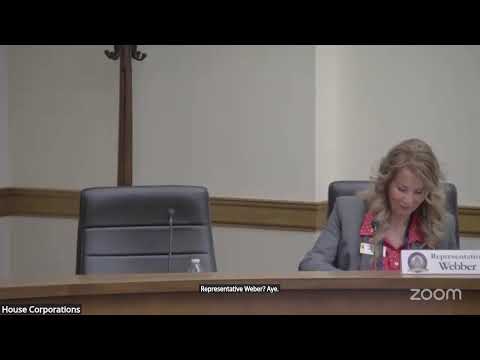
The committee considered an amendment derived from the AARP handout as a proposed amendment but no second was offered, so that amendment did not pass. The committee then called the roll on the bill; the motion carried with 8 ayes and 1 no (Representative Yin opposed). Representative Weber indicated she would carry the bill to the floor.
Implications and open questions
The transcript records the committee’s policy rationale and the concerns expressed by clerks and disability advocates about access. The record does not contain a final, agreed hardship amendment; clerks suggested alternatives that would minimize disenfranchisement. Implementation questions include outreach and logistics to ensure eligible voters without photo ID can obtain a free state voter card or use an established hardship procedure, and whether county-level accommodations (mobile ID events, clerk outreach) will be expanded.