Get Full Government Meeting Transcripts, Videos, & Alerts Forever!
Get email alerts on the Automated License Plate Reader topic
No spam. Unsubscribe anytime.
Huntington Park police brief council on automated license-plate reader system, data controls and uses
Summary
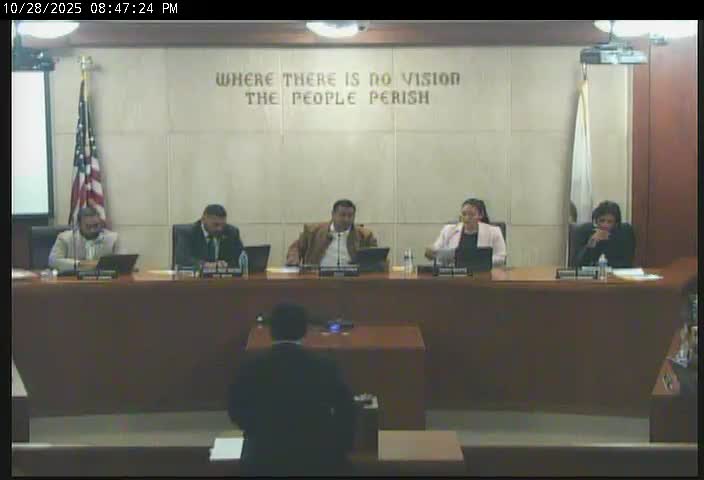
Sergeant Mike Parsa of the Huntington Park Police Department presented an overview of the city's automated license-plate reader system during a council study session, explaining how images are captured, converted into plate data and checked against "hot lists" for stolen vehicles and wanted persons.
Sergeant Mike Parsa of the Huntington Park Police Department presented an overview of the city's automated license-plate reader system during a council study session, explaining how images are captured, converted into plate data and checked against 'hot lists' for stolen vehicles, wanted persons and other alerts.
Parsa told the mayor and council that the system combines 19 fixed cameras at 17 locations and mobile cameras on patrol and six parking-enforcement vehicles, and that much of the equipment was paid for with a state Homeland Security grant. "These cameras capture images of license plates, and then through software those images are converted into plate data," he said. The department uses hot lists supplied by federal and local agencies to flag vehicles of interest.
Why it matters: Council members pressed the department on data sharing, retention and operational use because ALPR systems raise privacy concerns while also providing leads in criminal investigations. Parsa said searches must be tied to a case number and an investigative purpose, access is restricted to trained, credentialed staff, and the city stores ALPR data in a Criminal Justice Information Services (CJIS) compliant, encrypted data center and retains the data for two years before destruction.
The presentation stressed legal limits on sharing. Parsa cited recent California limits on cross-border sharing and said Huntington Park had "proactive[ly]" cut off sharing with federal agencies in line with state law. He told the council that, absent a judicial order or warrant, data sharing is limited to vetted and authorized California law enforcement partners under memoranda of understanding and internal audit procedures.
Council members asked how the system had assisted investigations. Parsa described locating a suspect in a hit-and-run by narrowing a time window, searching for dark vehicles that matched a description near the incident and comparing candidate plates with surveillance footage to identify a match. He said the system also contributed to stolen-vehicle recoveries, weapons seizures and leads in fatal-collision and homicide inquiries.
On parking enforcement and registration checks, Parsa said the system automatically scans parked vehicles as enforcement officers drive slowly by and can be configured to detect expired registration or time-limit violations, but the city is not using ALPR to issue parking citations at this time. He added that hot lists can be customized by the department's investigators for particular enforcement goals.
Parsa noted broader operational benefits and risks. He said ALPR saves officer time, increases interagency cooperation with neighboring California agencies and produces investigative leads that would otherwise require manual plate checks. He also warned that removing the system would reduce real-time notification, degrade regional information sharing and could jeopardize grant-funded components of the program, a legal question the department would refer to the city attorney.
The presentation concluded with procedural clarifications: searches are logged and audited, access can be revoked, the system complies with CJIS security controls (including U.S.-based storage and two-factor authentication requirements), and the department regularly conducts supervisory reviews of queries.
Looking ahead, Parsa and the chief invited further council questions and staff follow-up on how ALPR could interact with proposed parking-permit programs and on reporting options for requests or warrants that seek city-held ALPR data.