Get Full Government Meeting Transcripts, Videos, & Alerts Forever!
Get email alerts on the Cemeteries topic
No spam. Unsubscribe anytime.
Fort Smith board tables proposal for city to acquire four private cemeteries after debate over costs
Summary
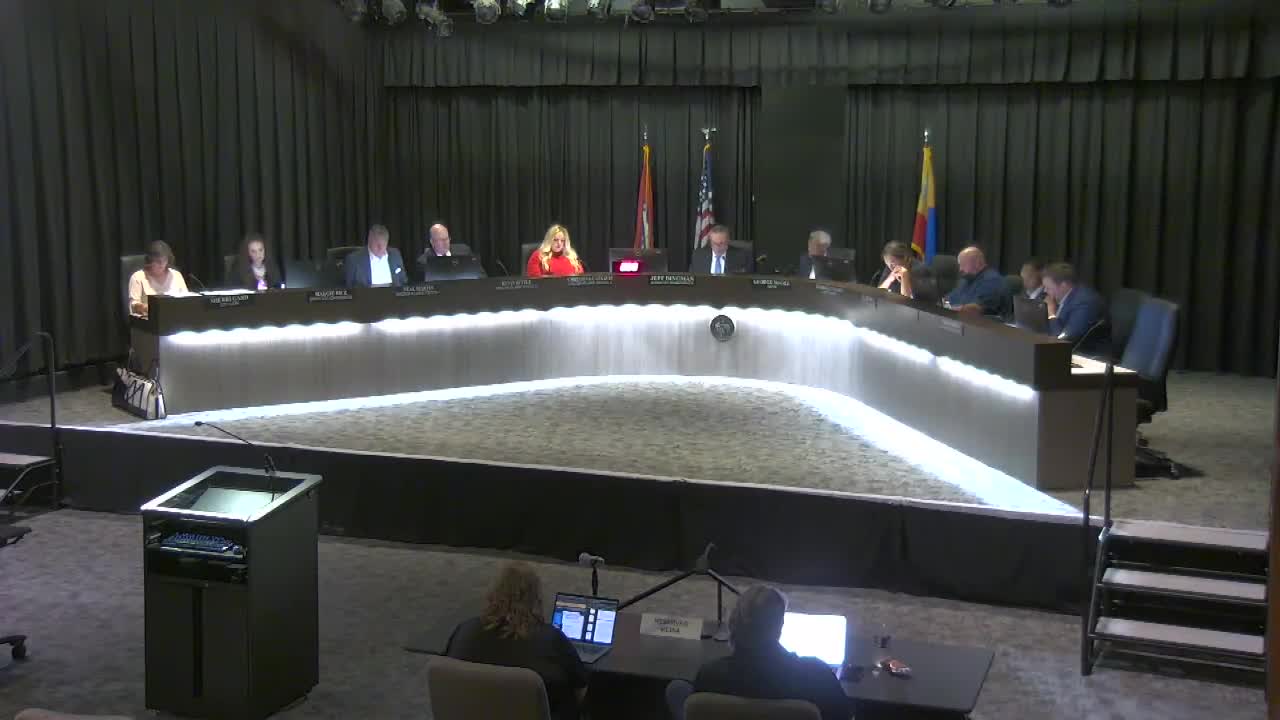
The Fort Smith City Board of Directors on Aug. 19 tabled — for further study — a staff recommendation that the city acquire and operate four privately owned cemeteries after an extended debate over costs and future funding.
The Fort Smith City Board of Directors on Aug. 19 tabled — for further study — a staff recommendation that the city acquire and operate four privately owned cemeteries after an extended debate over costs and future funding.
City staff presented four options for the privately managed Rose Lawn, Holy Cross, Forest Park and Washington Cemeteries: maintain the status quo, lease the properties while allowing the nonprofit to operate them, city acquisition and operation, or do nothing. Director of Parks and Recreation Sarah Dueser presented preliminary cost estimates that the board packet described as conservative: roughly $961,000 in initial startup capital for equipment and improvements and an estimated annual operating increase of about $1.25 million to staff and maintain the additional cemetery acreage to the same standards as Oak Cemetery.
The city noted nearly $86,000 in code‑enforcement liens have been placed on the properties over the past two years, and staff said continuing to enforce code without a new operating plan will likely increase liens with little prospect of repayment. Staff also said state insurance code provides mechanisms the state could use for insolvent cemeteries, though that path could result in prolonged neglect.
Ed Ralston, a member of the Fort Smith Cemeteries board, described the nonprofit’s financial shortfall and historical background. He said the organization still owes about $600,000 to First Security on a prior loan that had funded physical improvements and that First National previously forgave $200,000 of debt. "The majority of the money was spent at Rose Lawn," Ralston said, describing improved physical conditions but insufficient operating revenue. He added cemetery revenue comes primarily from plot sales and opening/closing fees and a relatively small perpetual‑care stipend from the state, not regular giving or church support.
Public commenters urged action to preserve dignity and history. Joy McCutcheon called cemetery maintenance a communal duty and criticized the city for not pursuing legislative changes sooner; Dan Williams and others urged more direct outreach to churches and volunteer organizations to assist with maintenance.
Board members questioned financing and alternatives. Director Rigo emphasized there is no cost‑neutral path to perpetual maintenance and asked colleagues to identify what level of ongoing funding they would accept. Director George Gitsavis and others pressed for clearer accounting and for more information on prior loan proceeds. Director Kemp urged more community‑based options before the board commits general‑fund dollars.
There was discussion of the perpetual‑care fund that currently exists for the nonprofit cemeteries. Cemetery board representatives said the fund’s earnings are small and that records and burial registries are incomplete, complicating any plan to seek contributions from families.
After several members signaled they were not ready to commit the general fund to an immediate one‑time transfer of operations, a motion to adopt the acquisition option was withdrawn and the board ultimately voted 7–0 to table the matter for future study and to return it to a study session for further due diligence and budgeting work.
What the board asked for next: staff was directed to compile additional financial options, estimates for phased acquisition or partial service arrangements, private‑contract mowing bids and the legal mechanics of transferring perpetual‑care funds or debts if the city assumed any ownership.
The board’s action preserves the status quo and keeps the nonprofit in place for the moment while the city and the cemetery board pursue follow‑up options.