
Advisory panel flags AI, telehealth and supervision in licensee survey; next meeting to focus on telehealth and AI
Get AI-powered insights, summaries, and transcripts
Subscribe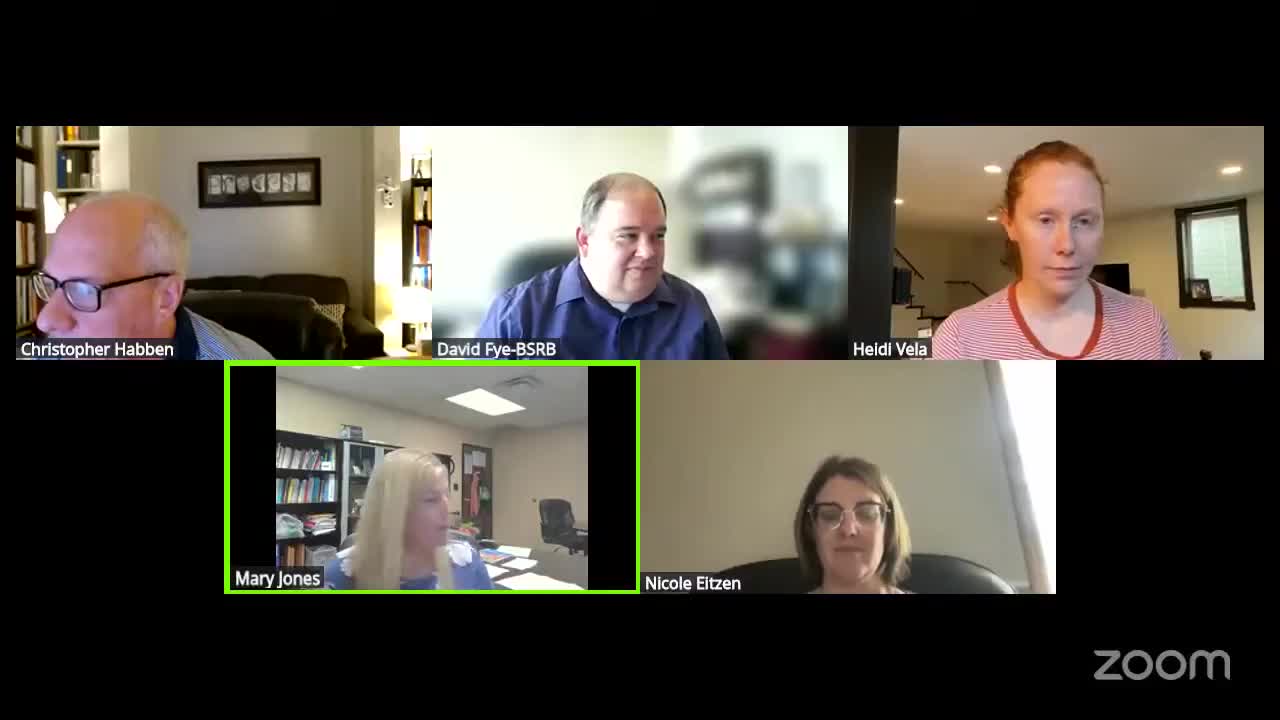
Summary
BSRB survey responses from marriage and family therapy licensees raised concerns about ethics (boundaries, social media), court/subpoena procedures, AI use and telehealth, and supervision and workforce readiness. The advisory committee agreed to focus its next meeting on telehealth and AI and requested follow-up materials and draft guidance.
Members of the Marriage and Family Therapy Advisory Committee spent substantial time on Aug. 15 reviewing a multi-profession survey and discussing recurring themes raised by licensees: ethical concerns (boundaries, social media and billing), court-related questions and subpoenas, rapid adoption of artificial intelligence (AI) tools and unresolved telehealth issues, and supervision challenges, particularly in rural areas.
Executive Director David Fye summarized the licensee survey work and explained that the LMFT report for this committee ran 77 pages with summary material at the front. "For the LC MFTs, 175 LC MFTs answered the question," Fye said when reviewing item counts; he highlighted common themes including concerns about confidentiality breaches, the need for AI-specific ethical guidance and request for more training on documentation, billing and suicide assessment.
Committee members urged moving from discussion to concrete guidance on AI and informed consent, noting risks from chatbots, automated note-takers and closed-source AI embedded in electronic health records. One member suggested drafting model language for informed consent and limits on chatbot use, and another recommended involving legal resources to create guidance for responding to subpoenas and court testimony.
Supervision and workforce issues also drew attention: members reported difficulty finding supervisors in parts of the state, questioned whether supervisor-training requirements were too onerous, and described a perception of underprepared recent graduates who entered clinical roles after pandemic-era training disruptions. The committee discussed the possibility of developing supervisor-targeted trainings and clearer written guidance on training-plan amendments and emergency supervisor roles.
The committee agreed that the next meeting (Oct. 10, 2025) should focus on telehealth (survey question 14 LMFT/question 13 LC MFT) and AI (question 16) and asked staff to circulate the relevant survey pages and suggested draft language in advance.