Get Full Government Meeting Transcripts, Videos, & Alerts Forever!
Get email alerts on the Composting Policy topic
No spam. Unsubscribe anytime.
Guam bill would expand small‑scale composting exemptions; Guam EPA supports bill but urges removing rulemaking clause
Summary
Bill 141‑38 would expand permitting exemptions for small‑scale on‑site composting across households, community gardens, schools, licensed food businesses and farms with specific cubic‑yard thresholds, while Guam EPA supports the bill’s goals but recommends removing a clause that delegates agency rulemaking authority.
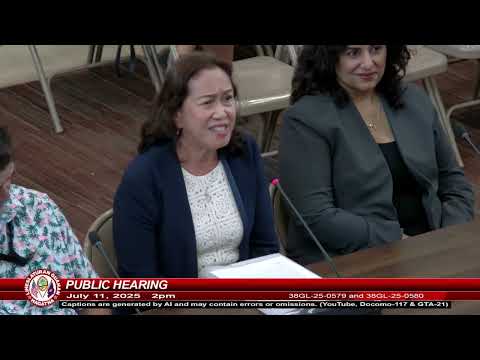
Bill 141‑38, introduced by Senator Sabina Flores Perez and read into the record at the July 11, 2025 committee hearing, would expand statutory exemptions from permitting for small‑scale on‑site composting. The sponsor’s statement describes composting as a low‑cost strategy to divert organic waste — which the sponsor’s statement cites as about 26% of Guam’s landfill waste — and to produce nutrient‑rich soil, support food security and reduce greenhouse‑gas emissions.
The bill as presented would add new statutory language and amend Guam Administrative Rules to provide tiered exemptions: up to 4 cubic yards per month for up to three households or apartment buildings; up to 8 cubic yards per month for community gardens, schools, licensed restaurants, retail grocers and hotels; and up to 10 cubic yards per month for farms. The bill would also prohibit biosolids, hazardous or toxic substances, animal byproducts and non‑organic materials, and require composting practices to prevent pests, odors and human or environmental health risks.
Guam Environmental Protection Agency Administrator Michelle L'Estomosa submitted written testimony supporting the bill’s intent and environmental safeguards but recommended an amendment to remove section 4. The agency’s written statement notes the bill’s language would amend administrative rules, and it cautioned that rulemaking is an executive‑branch function. Guam EPA said it will initiate rulemaking if the bill passes but urged the Legislature not to delegate or preempt the agency’s formal rulemaking authority.
Committee members also raised fiscal questions. Senator Matata asked whether the bill’s fiscal note accounted for potential cuts in federal EPA categorical grants noted in a White House FY2026 proposal and sought clarification about the status and contractual obligations of a 2023 waste grant of roughly $572,000. The committee chair said legislators would follow up with Guam EPA before markup to clarify fiscal impacts and grant dependencies.
Witnesses and senators discussed implementation considerations and outreach. GSWA and UOG Cooperative Extension materials were cited as local resources; committee discussion emphasized prioritizing commercial composting (restaurants, hotels, supermarkets) for cleaner feedstock and using household education and small grants to support backyard composting. The Guam EPA testimony endorses the bill’s prohibitions and inspection authority but requests the Legislature remove the bill’s section that amends administrative rules directly and allow the agency to conduct formal rulemaking.
The committee kept the record open for seven days for additional written testimony. No final action on the bill was recorded in the hearing.