Get Full Government Meeting Transcripts, Videos, & Alerts Forever!
Get email alerts on the School Facilities Bond topic
No spam. Unsubscribe anytime.
West Valley committee recommends $92.5 million bond (program $141.3M) to replace Atanum, consolidate mid-level campus; board debates using $4.9M in leftover 201
Summary
A community-appointed Long Range Facility Planning Committee recommended the West Valley School District put a $92.5 million bond on the February 2026 ballot to fund a $141.3 million facilities program that would replace Atanum Elementary, refresh Mountain View Elementary, consolidate grades 6'8 on a single mid-level campus and repurpose the junior high as district offices.
A community-appointed Long Range Facility Planning Committee recommended that the West Valley School District place a $92.5 million bond measure on the February 2026 ballot to fund a $141.3 million facilities program that would replace Atanum Elementary, refresh Mountain View Elementary, expand and modernize the district's mid-level campus to house grades 6'8, and repurpose the junior high as district offices.
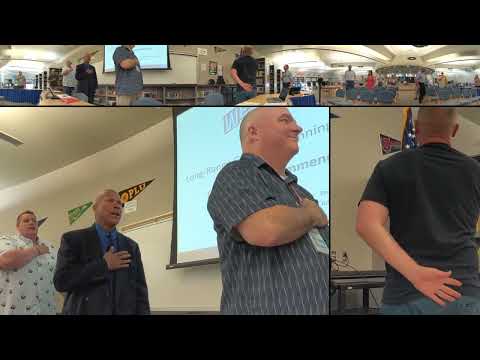
The committee presented the plan to the board on July 8. The committee estimated the full program at $141,300,000 in 2025 dollars and said state matching funds could cover about $43,800,000 of that total, leaving a district share near $97,400,000. The committee proposed using $4,900,000 of remaining proceeds from the district's prior bond to begin urgent projects in summer 2026 and reduce escalation, which would lower the new bond request to $92,500,000.
"We would like the Board to run a bond in February of 2026," committee representative Tony Farina told the board. Farina and Natalie Sherzad laid out the committee's analysis of building condition and functional adequacy, noting the district last did a five-year reassessment in 2020 and completed an updated study in fall 2024 funded by an OSPI grant.
Key projects and cost estimates the committee released include: - A full replacement/modernization of Atanum Elementary (built 1950, last updated 1993) with six classrooms, a cafeteria and specialty spaces, estimated at about $38,000,000 (2025 dollars). - A "refresh" of Mountain View Elementary (built 1949; last updated 1993) focusing on water piping, safety and interior updates; the committee said the site and utility limits make full replacement impractical. - An addition and full upgrade to the current middle school (including HVAC and an 85,000-square-foot expansion) to consolidate grades 6'8, estimated at about $71,000,000 (2025 dollars). The recommendation would then repurpose the junior high as district administration and keep the junior high gym and auditorium as districtwide assets.
Corey Plager of DA Davidson presented financing assumptions and a timing case that lines up the new bond with the payoff of the high school bond in 2027. Using conservative AV growth and a 20-year structure, the presentation projected a tax-rate impact roughly equivalent to the district's current rate ' the example model used a bond component of about $0.84 per $1,000 assessed value, producing a combined taxpayer liability roughly in line with 2025/2026 levels.
Committee members and the consultants emphasized the importance of maximizing the state match: "We don't have to shoulder this all ourselves. There's state matching money available," the committee presentation said, estimating a roughly 47% match on certain replacement/expansion components.
Board members pressed for details on several items during a lengthy question-and-answer period: how utilization and enrollment projections were derived, whether Mountain View should receive a modernization rather than a refresh, traffic and parent-pickup circulation at Mountain View, the tradeoffs of a single-package bond versus phased bonds, and the political calculus around using leftover bond proceeds versus defeasing them back to taxpayers.
Corey Plager said municipal borrowing costs for school bonds are currently in the low-to-mid single digits (his presentation used a conservative ~4% assumption), noted the 60% supermajority requirement for bonds in Washington and reviewed districts' historical success rates. He advised the board on timing options (February, April or November ballots) and said a February measure with an April fallback is a common path if an initial attempt falls short.
Committee members said the $4.9 million in existing proceeds would allow some work to begin sooner, reduce escalation, and modestly lower the next bond ask. Several board members and community speakers urged caution: some argued that returning remaining proceeds to taxpayers (defeasance) would build goodwill and improve passability; others argued that spending the funds now on urgent safety and mechanical projects is the fiscally prudent choice because delays raise costs.
No bond resolution or vote occurred at the July 8 meeting. The board approved routine items (minutes and officer/signatory updates) and spent much of the meeting questioning the committee and consultants and discussing community outreach and messaging. Board members directed staff to pursue legal counsel input on what language could be placed in a bond resolution regarding leftover proceeds and to plan community engagement in the fall before the board takes any final action on defeasance or a resolution to call a bond election.
Votes at a glance - Approval of June 24 board meeting minutes: motion moved and approved (5'00). - Resolution updating investment/auditing officers and check signatories (removal of Joe Connolly; adding Ryan McDaniel): approved (5'00).
Why it matters If passed, the bond would replace the district's oldest elementary facility, consolidate widely separated mid-level grades into one modern campus, and capture state matching funds that the district's consultants said are unusually generous for the proposed projects. The committee framed the plan as a coordinated package to minimize temporary housing costs and maximize state match; the board's discussion focused on the political feasibility of running one large package, how to present the plan to voters and whether returning leftover bond proceeds would improve the measure's chances.
What's next Board members asked staff to consult bond counsel about defeasance and to schedule community engagement so the board can decide by the fall whether to include the use of remaining proceeds in a bond resolution or to defease funds back to taxpayers. If the board proceeds, consultants sketched a timeline that would support a February 2026 ballot placement and multi-year construction and implementation from 2026 into 2031.
Sources and provenance Quoted material and event details are taken from the July 8, 2025 West Valley School District board meeting transcript. Topic introduction in the transcript: "We would like the Board to run a bond in February of 2026..." (presentation by Tony Farina). Topic finish in the transcript: committee and consultant finance presentation and board Q&A culminating in discussion of defeasance and next steps.