Get Full Government Meeting Transcripts, Videos, & Alerts Forever!
Get email alerts on the Signage topic
No spam. Unsubscribe anytime.
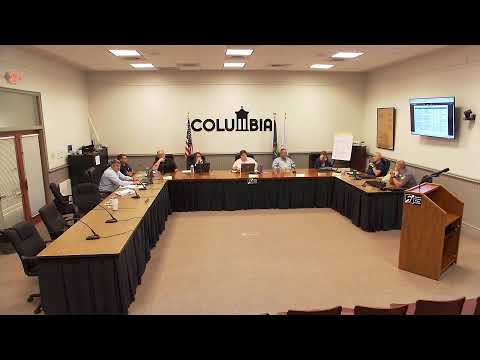
Columbia council debates advertising on North West River Trail fence, suggests interim permit letter
Summary
Columbia Borough Council spent a workshop session weighing whether to allow business advertising on the North West River Trail fence and how to reconcile borough zoning with PennDOT permitting requirements.
Columbia Borough Council spent the bulk of a workshop session discussing whether to allow commercial signs on the North West River Trail fence and what steps a business owner must take to place a sign there.
Staff told council that under PennDOT guidance off-premise advertising within 660 feet of the state right-of-way generally requires a PennDOT annual permit. "Without going through PennDOT and having an annual permit through PennDOT, anything within 660 feet of the right of way is prohibited," a staff member said. Council members and staff agreed that the borough must reconcile PennDOT rules with the borough's zoning ordinance before permitting larger or multiple fence signs.
Businesses and residents offered examples and objections. One business owner said he hung a 2-by-3-foot sign and reported that borough staff later removed it; he said the sign had brought customers. Council members said PennDOT can remove signs at any time, and borough staff must avoid being the de facto permit authority between PennDOT and sign holders. "If PennDOT comes in and takes it down anytime they want," a council member said, "they may go back and look it up and see if we have a permit for it."
Council discussed options: (1) ask PennDOT for a single municipal permit covering the fence and then control content and spacing; (2) change the zoning ordinance (a heavier lift and riskier politically); or (3) pursue other solutions such as a borough-owned digital kiosk or freestanding signs within borough property. One council member proposed drafting a borough plan and presenting it to PennDOT so the borough could administer the fence as a single permit holder.
For immediate relief, staff offered to write a letter on borough letterhead confirming that a 2-by-3-foot sign fits the borough's current zoning and that applicants should secure the required PennDOT permit before or after applying. Council accepted direction to prepare that letter and to develop a more comprehensive policy and possible ordinance amendments for future meetings.
Council emphasized that any borough policy must comply with PennDOT and the Federal Highway Beautification Act of 1965 as implemented by PennDOT rules. Council also asked staff to return with a recommended process for (a) how many 2x3 signs could be placed given state spacing rules, (b) an application check-list (including PennDOT permit copy), and (c) draft content limitations consistent with state rules. "We can work something like that out for now," a council member said.