Get Full Government Meeting Transcripts, Videos, & Alerts Forever!
Get email alerts on the Special Education topic
No spam. Unsubscribe anytime.
Poudre School District probes lagging on‑time graduation rates for students with IEPs; launches targeted outreach and transition supports
Summary
Poudre School District R‑1 officials told the Board of Education on Nov. 4 that students supported through individualized education programs (IEPs) are making year‑over‑year academic growth but are graduating on time at lower rates than both district peers and comparable Colorado districts, and the district outlined immediate and longer‑term steps to address the gap.
Poudre School District R‑1 officials told the Board of Education on Nov. 4 that students supported through individualized education programs (IEPs) are making year‑over‑year academic growth but are graduating on time at lower rates than both district peers and comparable Colorado districts, and the district outlined immediate and longer‑term steps to address the gap.
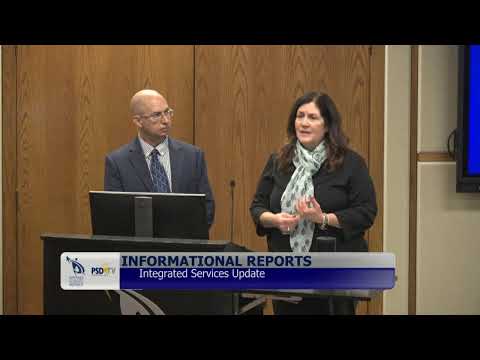
District Chief Institutional Effectiveness Officer Dr. Dwayne Schmitz said the district’s growth measures (NWEA MAP z‑gain analyses) show students with IEPs generally achieve “a year’s growth in a year’s time” but that achievement and graduation are distinct measures. "We see growth," Schmitz said during the presentation, "but our on‑time graduation numbers are not where we want them to be." (presentation start 06:45:32)
Dr. Jody Rommel, director of integrated services, told the board the district has opened new capacity — four classrooms this fall (three elementary autism center‑based classrooms and one middle‑school effective needs classroom) — and launched the Transition Pathways Academy (TPA) for 18–21 programming and an EEO (extended evidence outcomes) diploma pathway. Rommel said the EEO pathway allowed the district to award diplomas last May to students who previously would have received certificates of completion: "We graduated 18 students last spring" under the new pathway, she said. (presentation 06:45–07:15)
Why it matters: district staff presented three interlocking issues they say explain the on‑time graduation gap for students with IEPs — students not meeting graduation requirements within four years; prior constraints on 18–21 services that kept students in high school past age 18; and inconsistent systems and coding practices that affect how on‑time graduation is recorded. Dr. Rommel said 51 students with IEPs were still enrolled beyond their expected fourth year of high school in the most recent cohort, a datum staff flagged as one of the priorities for follow‑up. She also said 18 students with IEPs dropped out last year. (data summary 07:02–07:20)
Staff recommended and described a set of actions the district is already taking or will take: - Proactive individual planning: assistant directors and IS leads will work with high school principals and case managers to identify students at risk of not graduating on time and create individualized plans. Rommel said teams are visiting schools to make such plans. - Increased transitions capacity and pathways: the new Transition Pathways Academy (TPA) delivers community‑based life and employment skills and internship opportunities; staff said TPA placement is intended to expand options for students rather than keep them in high school by default. - EEO diploma pathway: the district now has a mechanism for some students assessed on extended evidence outcomes to earn a diploma rather than a certificate of completion; staff said this opens options for some students previously excluded from diploma pathways. - A dedicated integrated‑services social worker: the district assigned staff to support at‑risk students and families (including McKinney‑Vento cases), connect families to adult services, and support case managers. - Data, coding and training work: staff said they will provide training for registrars, case managers, counselors and administrators on graduation requirements, correct coding and reporting to reduce miscounts and invisible barriers to on‑time graduation.
During more than an hour of board questions and public comment the conversation covered several recurring points: - Transition timing and culture: board members and staff agreed that practices differ by district and by school. Several presenters and board members said some districts transition more students into adult/transition programming immediately after the fourth year; others, including Poudre schools historically, have more students remain at their home high school. Rommel said practice and parent preference both influence the choice and that expanding TPA capacity and outreach may shift decisions in future years. - Participation in state assessments: staff and board members noted a measurable participation gap on CMAS between students with IEPs and students without IEPs (examples cited in the meeting: roughly 82–83% participation for IEP students versus about 94–95% for non‑IEP students). Rommel said parents may opt a child out and that teams do not have the unilateral authority to excuse a student from CMAS; the district also uses other measures such as MAP and IEP progress monitoring. Board members flagged the participation gap as an evidence gap that makes it harder to assess achievement uniformly. - Dropout and housing instability: Rommel said roughly half of the recent 18 students who dropped out were served through McKinney‑Vento (housing‑insecure) supports. Board members and commenters urged stronger wraparound supports and earlier transition planning to reduce the cliff effect at age 18. - Staffing, training and inclusion: multiple public commenters and board members raised concerns about para‑educator shortages, caseloads, and the capacity of general education teachers to implement supports. Speakers asked the district to ensure paraprofessionals and teachers receive targeted professional learning on co‑teaching, Universal Design for Learning (UDL) and IEP implementation. Rommel and Schmitz said staff training and additional outreach to families and case managers are planned for the current school year.
What the district will do next: staff said the district will continue an ongoing, semester‑long process of case manager outreach, school‑by‑school data dives and training. Rommel provided a timeline for continuing monthly and semester work, and Schmitz said the board will receive follow‑up data, including the results of registrar/coding audits and updates on TPA capacity and use. Staff also committed to providing the board more granular counts by school and cohort year on request.
Quotes from meeting participants (verbatim as attributed in the meeting): "We see growth, but our on‑time graduation numbers are not where we want them to be," Dr. Dwayne Schmitz said in the presentation (06:45:32). "Now every single student has a way of getting a diploma in this district," Dr. Jody Rommel said when describing the EEO pathway and last spring’s first cohort of graduates (06:55:00).
Context and limitations: district presenters repeatedly cautioned that some data nuances depend on coding differences and local practices. Staff said comparison districts that appear to have higher on‑time IEP graduation rates often use different practices for when students are transitioned into adult services and how those students are counted for on‑time reporting. Several board members requested more multi‑year, school‑level numeric tables (cohort counts by year and program) to better parse trends by site and to quantify how many of the 51 students who remained in high school beyond year four had already met diploma requirements but remained enrolled by IEP team choice.
Bottom line: staff said that achievement and growth indicators for students with IEPs are not systematically worse than statewide peers, but on‑time graduation lags behind comparable districts. The district described a set of operational next steps — outreach, coding and training, increased TPA capacity and an IS social worker — and committed to returning to the board with more detailed, school‑level data and progress updates.