Get Full Government Meeting Transcripts, Videos, & Alerts Forever!
Get email alerts on the Housing topic
No spam. Unsubscribe anytime.
Garden City officials say RHID has driven most local housing growth but production lags projected need
Summary
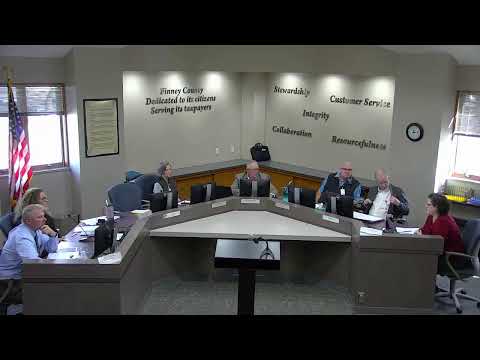
Garden City Assistant City Manager Danielle Burke told the Finney County Board of Commissioners on Feb. 3 that the city has relied on its Reinvestment Housing Incentive District program, or RHID, as its main tool to stimulate housing construction over the past decade and that current permitting and occupancy levels fall short of the number the city's housing analysis says may be needed over the next decade.
Garden City Assistant City Manager Danielle Burke told the Finney County Board of Commissioners on Feb. 3 that the city has relied on its Reinvestment Housing Incentive District program, or RHID, as its main tool to stimulate housing construction over the past decade and that the county is starting to see projects that use the same tool.
"RHID is really the primary tool that we utilize as it relates to housing development within the city of Garden City, as well as in Finney County," Burke said. She and city staff summarized a 2024 housing "chat" report the city produces with Finney County Economic Development; the presentation highlighted gaps between housing production and projected demand.
The city's report projects several thousand new housing units will be needed if recent growth rates continue. Burke cautioned the slide is a "rear-view" snapshot of need through the end of 2024 and does not account for anticipated population shifts such as workers relocating after a Tyson plant closure elsewhere in the state.
Burke described permitting and certificate-of-occupancy trends: single-family permits have fluctuated (highs in the 40s–50s in recent years) while multifamily permits produced larger numbers of "front doors" per permit during years with apartment construction. The presentation noted the Hunters Glen multifamily project generated many multifamily permits; upcoming Hunters Glen phases 3A and 3B are listed on the city's materials as 44 and 68 units, respectively.
Lana Duvall, president and CEO of the Finney County Economic Development Corporation, emphasized that RHID investments are intended to bring new residents and workers who will generate sales-tax and economic activity in addition to property-tax flows: "When we create housing opportunities for new folks to come into our community ... we are going to have increases in sales tax revenues from their shopping here," she said.
Commissioners pressed staff on reasons local production lags metro areas, citing contractor capacity and workforce availability. Burke and Duvall identified two near-term constraints: (1) builders in larger metropolitan areas deploy large crews across multiple projects and are less likely to mobilize small projects in rural areas, and (2) local capacity for trades and crews is limited and may require years of workforce development to expand. Burke noted ongoing partnerships with the community college to build trades capacity.
The city provided a list of RHID-approved projects, showing roughly 1,200 units in the development queue but fewer constructed units to date; County and city staff noted some RHIDs will expire over the next several years, which will return incremental property-tax revenue to taxing entities after reimbursement ceilings or time limits are reached.
Commissioners asked the city to provide comparative data on housing production in comparable counties (Liberal, Dodge City) and to consider whether the county and city can take additional steps to attract construction crews or otherwise accelerate buildout. Burke offered to follow up with more detailed comparisons.
The presentation and subsequent discussion did not propose a new ordinance or specific county action; rather, it was presented as an annual update and opportunity for the county to coordinate on workforce, permitting and RHID timing.