Get Full Government Meeting Transcripts, Videos, & Alerts Forever!
Get email alerts on the Solid Waste Policy topic
No spam. Unsubscribe anytime.
Commissioners schedule March hearing on Solid Waste residential assessment after staff presents reserve options
Summary
The board scheduled a March 5, 2025 public hearing at 2 p.m. to consider a proposed Solid Waste Residential Assessment Ordinance and directed staff to provide more analysis on alternatives, including options to set a storm/unrestricted reserve at $30 million, $20 million or $10 million and possible borrowing scenarios.
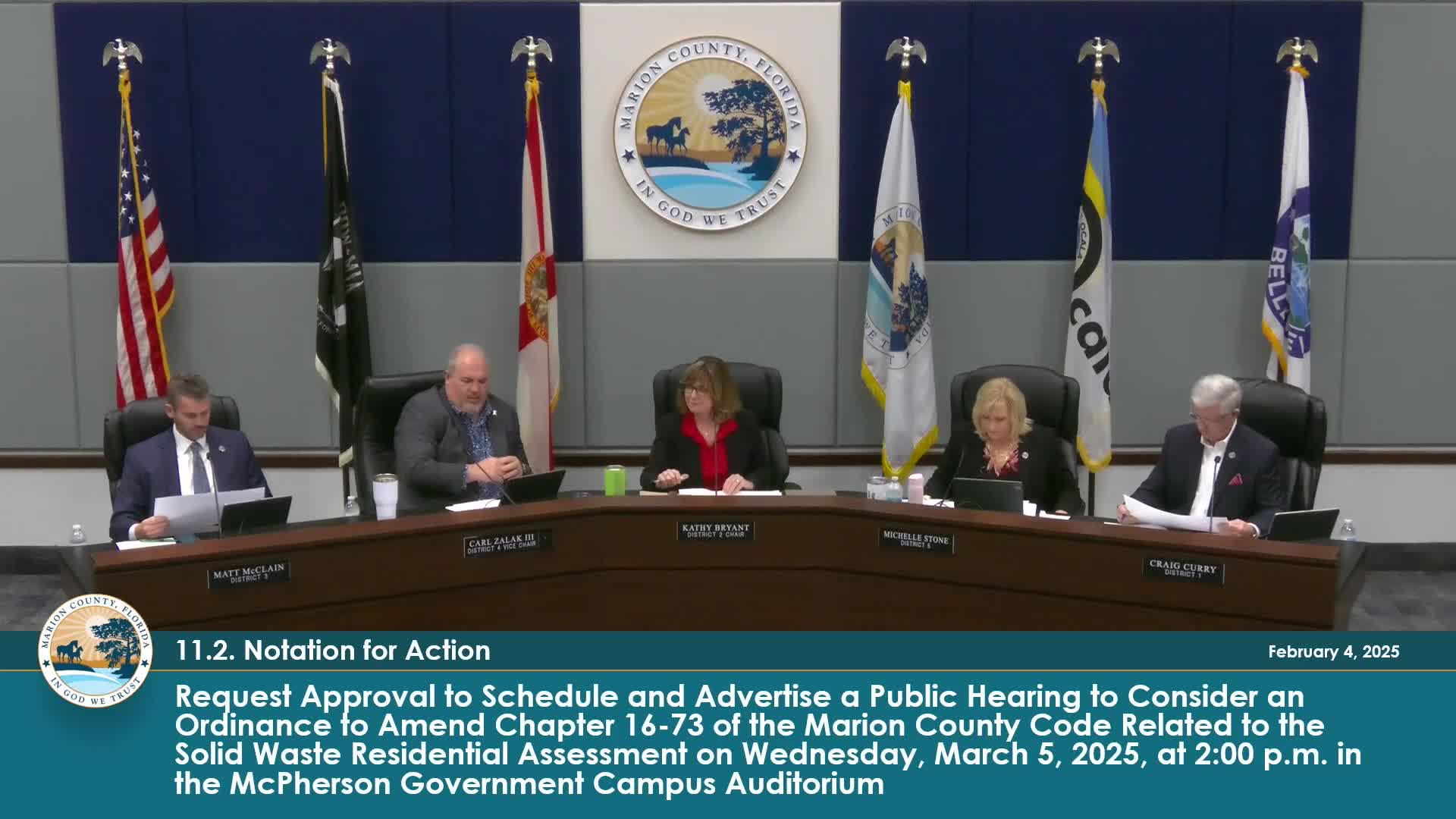
Marion County commissioners voted Feb. 4 to schedule a public hearing on March 5, 2025 at 2 p.m. to consider a proposed Solid Waste Residential Assessment Ordinance. County administration presented several reserve‑planning scenarios to cover storm or other catastrophic events and discussed options that would either hold a large unrestricted reserve or borrow short‑term to cover emergency expenditures with the expectation of reimbursement.
County staff presented three storm‑reserve options: a $30 million goal, a $20 million goal and a $10 million goal, and noted those reserves imply different one‑time assessment amounts or phased‑in assessment strategies. During discussion staff also raised the possibility of borrowing to bridge emergency expenses (with the county paying debt service until reimbursements arrive from FEMA or other agencies), but said staff had not yet confirmed whether FEMA will reimburse interest or debt service on short‑term loans.
Commissioner Stone moved to schedule the March public hearing; Commissioner Curry seconded. The motion passed unanimously. Staff will return with clearer numbers and analysis ahead of the hearing, including any information about how peer counties have handled borrowing and whether interest/debt service is reimbursed by state or federal agencies.