Get Full Government Meeting Transcripts, Videos, & Alerts Forever!
Get email alerts on the Land Use Rezoning topic
No spam. Unsubscribe anytime.
Newport News council rejects rezoning for Old Fort Eustis Boulevard development after hours of testimony
Summary
Newport News City Council voted 3–4 on Feb. 25 against a rezoning request for a 6.297-acre parcel at 628 and 634 Old Fort Eustis Boulevard that would have allowed multifamily housing, after roughly 15 speakers raised competing concerns about traffic, drainage and housing supply.
Newport News City Council voted 3–4 on Feb. 25 against adopting an ordinance to rezone a 6.297-acre site at 628 and 634 Old Fort Eustis Boulevard to permit multifamily development. The application, identified in the public hearing as Charlie Zulu-2024-0001, was advanced by Fort Eustis Investment Partners LLC and developer Alvin Keels.
The hearing drew about 15 speakers. Michael Massey, who said he represented Alvin Keels, told council the proposal was consistent with the city’s comprehensive planning guidance and outlined financing support. Architect and engineering representatives described site design, proposed drainage controls and proposed buffering to reduce impacts on adjacent homes. The applicant and supporters characterized the project as workforce or market-rate housing tied to nearby employers such as Fort Eustis and the shipyards.
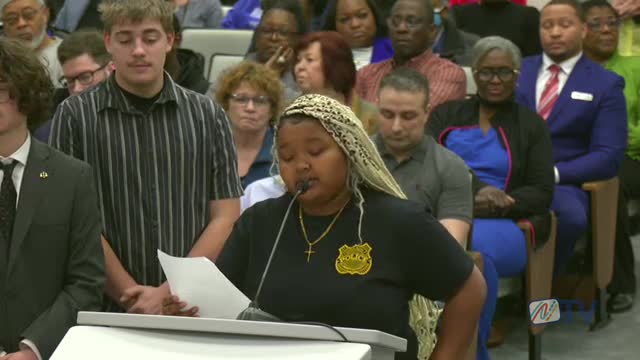
Neighbors and neighborhood representatives urged denial or delay. Woodcreek Homeowners Association treasurer Bridal Craver said the project would increase traffic near an intersection residents called dangerous and said the community had opposed the plan 6–2 at the planning commission. Several neighbors said the site has a single constrained entrance, raised concerns about stormwater and runoff onto backyards, and questioned whether a 60-foot landscaping buffer proposed after community meetings would be adequate.
Developer Alvin Keels acknowledged residents’ concerns during a later appearance and said the development team would proffer a traffic signal and larger vegetation buffers; he told council the team would invest in intersection improvements and estimated the project would generate approximately $250,000 in tax revenue annually over a 10-year span. At one point, speakers and staff used the term “market rate” and “workforce” interchangeably: the applicant’s attorney at the hearing referenced a 120-unit figure; the project’s architect later described proposing “20 units” in preliminary illustrations, creating a discrepancy in stated unit counts during the public record.
Council debate focused on timing and citywide housing strategy. Several council members said the broader “comprehensive plan” and a planned citywide housing strategy need to guide major land-use changes, and some members urged additional, consistent community engagement prior to a rezoning decision. Councilmembers representing the district that contains the parcel noted the controversy and asked that district concerns carry weight.
The roll-call vote on adopting the ordinance was: Councilman Long, Councilwoman Vick and Councilman Ealy voting in favor; Councilman Harris, Mayor Jones, Vice Mayor Bethany and Councilman Coleman voting against. The motion to close the public hearing earlier in the evening passed unanimously before debate and the final vote.
What happened next: the ordinance failed, and councilmembers said staff and the applicant should meet with affected residents and planning staff to explore options, proffers and a clearer process before returning the matter to the council.
Why it matters: rezoning decisions determine neighborhood form and traffic patterns and can set precedents for future housing types in an area. Residents cited safety and drainage; proponents emphasized housing supply and proximity to jobs. The council framed the vote as a choice about process and citywide housing strategy, not a permanent prohibition on development at the site.