Lifetime Citizen Portal Access — AI Briefings, Alerts & Unlimited Follows
Chancellor outlines FY2026 higher-education recommendations emphasizing formula growth, retirement and health-cost adjustments
Loading...
Summary
The chancellor presented the University System of Georgia’s FY2026 recommendations, saying formula‑driven funds and enrollment growth drive most increases while calling out retirement and health‑cost adjustments and several targeted program changes.
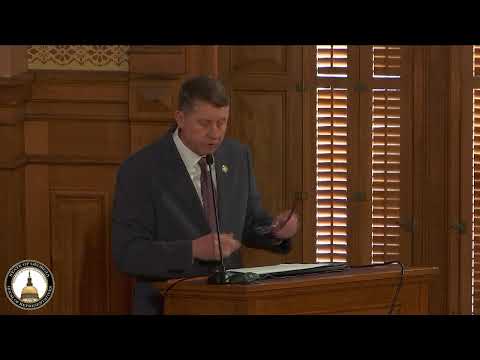
The Chancellor (University System of Georgia) told the joint House Appropriations Subcommittee on Higher Education and the House Higher Education Committee that the subcommittee oversees roughly 14% of the state budget and that higher-education programs touch more than 900,000 Georgians annually.
He said the governor's FY2026 recommendations are driven largely by the funding formula and enrollment growth, noting a two‑year lag in credit‑hour calculation. "This money that we're investing ... is making a difference in transforming lives and legacies," the chancellor said.
Key line items the chancellor highlighted include an $11,000,000 increase to reflect the change in the Teacher Retirement System (TRS) employer rate, a $1,200,000 adjustment that reduces agency premiums for DOAS‑administered insurance programs, and a $19,400,000 request to support increases in health‑care costs for active employees and retirees (part of the state share was funded through the formula). He said credit‑hour growth produced a formula increase and that $1,700,000 is included for maintenance and operations tied to new academic square footage.
The chancellor said the budget removes an $8,700,000 state match previously recorded for the Medical College of Georgia (MCG) 3+ program; he emphasized the change stems from matching/foundation expectations and not program performance. He described a $1,840,000 health‑insurance related allocation for public libraries and $4,372,000 to provide funds to local library systems driven by population growth.
The chancellor also described a new $3,000,000 allocation split between Georgia State University and the University of Georgia law schools intended to expand clinical, experiential learning and recruitment for legal education. Committee members asked for a follow‑up briefing with the two law‑school deans for additional detail on clinical uses and recruitment strategy.
The chancellor flagged requests in the B budget for the Skidaway Institute for Oceanography, including renovation of collaborative space and dock electrical work tied to a state‑owned research vessel. He invited questions and offered staff and documentation via the tracking sheet provided to the committees.