Get Full Government Meeting Transcripts, Videos, & Alerts Forever!
Get email alerts on the Zoning Landscaping topic
No spam. Unsubscribe anytime.
York County adopts tighter landscape and greenbelt standards, encourages native plants
Summary
On Feb. 18 the York County Board of Supervisors adopted ordinance 25‑4, revising the zoning code’s landscaping, transitional‑buffer and greenbelt rules to require professional plans in many commercial cases, rebalance planting ratios for better screening, and promote native plants.
The York County Board of Supervisors adopted proposed ordinance 25‑4 on Feb. 18, amending the county zoning code to update landscaping standards, transitional buffers and greenbelt regulations.
Planning staff told the board the ordinance is a reorganization and modernization of lengthy code language and highlighted several substantive changes: (1) in many instances commercial and industrial site plans must be prepared by a qualified professional (landscape architect, Chesapeake Bay Landscape Professional, certified horticulturist or similar); (2) transitional‑buffer planting ratios are rebalanced to increase tree coverage in order to improve visual screening; (3) the code now disallows certain invasive species and encourages native plants — the ordinance sets a target of 35% native species for new development on the Virginia Coastal Plain; and (4) greenbelt planting credits must be evenly distributed to avoid concentrated plantings that fail to provide screening.
Staff also said the ordinance clarifies maintenance obligations, requires designers to consider protection of existing tree stands adjacent to cleared areas, and adds a modest incentive in the plant‑credit chart for smaller, quickly establishing understory trees.
Supervisor questions focused on applicability to existing developed lots, enforcement and whether the county had solicited input from local businesses. Planning staff said the rules govern primarily commercial/industrial site plans and that pre‑developed properties will be handled with reasonable flexibility during site‑plan review; staff also said they had reviewed the ordinance with industry stakeholders during prior work sessions and had reorganized text to improve clarity for applicants.
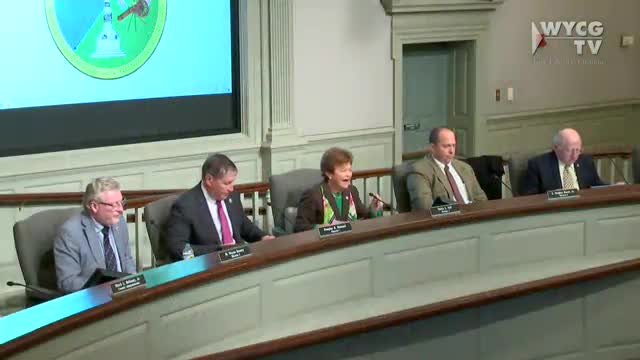
The motion to adopt ordinance 25‑4 passed by roll call vote: Holroyd, Drury, Roan, Shepherd and Snoll voted yes (5–0). The ordinance becomes part of chapter 24.1 and will be applied during future site‑plan reviews.
Ending: The board approved the updated landscaping standards and directed staff to implement the changes in site‑plan review and to provide guidance to applicants.