Get Full Government Meeting Transcripts, Videos, & Alerts Forever!
Get email alerts on the Public Safety topic
No spam. Unsubscribe anytime.
Council asks staff to return with targeted camera use cases and a surveillance policy
Summary
Council directed staff to prepare 2'3 targeted deployment scenarios, cost estimates and a draft policy for video surveillance and AI-enabled systems after a staff briefing on vandalism, theft and limitations of the city's current local storage cameras. Council emphasized starting with narrow pilots and coordinating with the county sheriff.
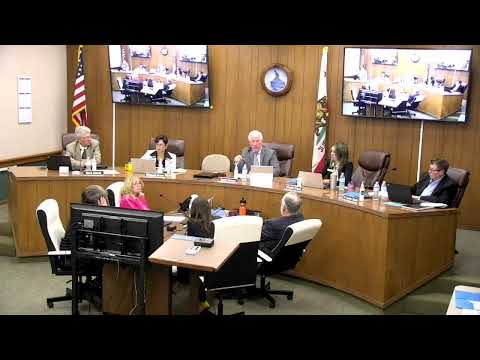
Solvang City Council on Feb. 11 asked staff to return with specific options for upgrading the city's video surveillance systems, including limited pilots and a comprehensive policy that balances public safety and privacy.
Olivia (city staff) told council members that the city has experienced crimes of opportunity, vandalism to public restrooms that cost about $30,000 to repair, thefts and damage to parked vehicles, and incidents affecting tourists. Current cameras often require manual review, have local storage and produce low-resolution footage that is difficult to share with law enforcement. Olivia said the staff packet included model policies from the California Joint Powers Insurance Authority (CJPIA) and the Port of San Francisco to guide policy development.
Staff outlined three broad options: a full-scope evaluation (detailed site needs, vendor evaluation, and cost estimates), a targeted pilot in a specific area to test effectiveness and community response, or to maintain the status quo while preparing a future plan. Councilmembers repeatedly emphasized that operational issues are crucial: who monitors footage, how alerts would be handled, and how to coordinate with the Santa Barbara County Sheriff's Office.
Councilmember Infante suggested starting with narrowly targeted use cases, such as vandalism-prone downtown restrooms and high-volume seasonal locations. "One great use case'is the vandalism in the bathrooms that happens very frequently," Infante said, recommending a pilot in a known hotspot to test effectiveness and operational procedures.
Several councilmembers and staff discussed AI-enabled, cloud-based cameras, license-plate readers and drone cameras as technical possibilities while noting legal and privacy constraints. Staff and the council referenced CJPIA guidance recommending clear public notification, minimal retention limits, access controls and staff training to mitigate legal risk.
Council direction: staff should return with 2'3 scenarios showing proposed locations, number and type of cameras, contract length and rough costs; an operational plan describing monitoring and ties to the sheriff's response; and a draft surveillance policy that addresses privacy, permitted uses, data retention and public notice. The council did not vote on expenditures; it requested a later return with options and public engagement steps.
Why it matters: The council sought to balance local public-safety benefits with privacy and liability concerns. Starting with a targeted pilot gives the city an opportunity to measure effectiveness and community reaction before broader deployment that would require additional operational resources and formal policy protections.