Get Full Government Meeting Transcripts, Videos, & Alerts Forever!
Get email alerts on the Capital Construction topic
No spam. Unsubscribe anytime.
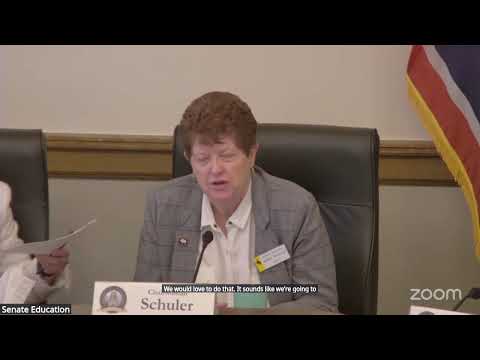
Committee hears major debate on returning school construction to local control; no action taken on constitutional amendment
Summary
Senate Joint Resolution 6, which would amend the Constitution to return primary responsibility for school capital construction to local districts while creating a state equalization mechanism, drew lengthy sponsor remarks and opposition testimony but received no committee vote on Jan. 30.
Senate Joint Resolution 6, a proposed constitutional amendment to move primary responsibility for school capital construction to local districts (with a state equalization mechanism), generated extended debate in the Senate Education Committee on Jan. 30 but no committee vote.
Sponsor Senator Curt Scott said the measure would restore local control of capital construction, require voter approval for bond issues and establish an equalization system so districts with below‑average assessed valuation per person would receive state support. He framed the proposal as a response to what he described as a "pork‑barrel" effect after the state assumed capital‑construction responsibility following the Campbell decisions; Scott said the change would make local taxpayers directly accountable and restore a voter check on expensive local projects.
Opponents and multiple witnesses warned the amendment would shift responsibility for a large backlog of major maintenance to local taxpayers and could require substantial local tax increases. Tate Mullen of the Wyoming Education Association said the state still faces roughly $2 billion in major‑maintenance needs and that reverting responsibility without fully addressing major maintenance would move that burden to local districts. Witnesses also noted that the state is already subject to litigation over adequacy for school facilities.
Senator Scott described technical elements in the draft: equalization based on state average per‑person assessed valuation, an ability for the legislature to create alternative funding mechanisms (for example, a statewide sales tax) in extreme circumstances, and a provision to keep the existing 10% constitutional local debt limit calculated only on the district's share. He acknowledged the wealthy mineral or high‑residential‑value counties would pay less in local mill increases under the proposed equalization but argued the approach is administrable and would reinstate voter accountability.
The committee heard testimony on both sides and agreed to take more testimony at a later meeting rather than take immediate action on the resolution.
Why it matters: The measure would effect a constitutional change to how Wyoming funds school buildings and capital projects, with potential long‑term consequences for local property taxes, equalization formulas and the state’s remaining major‑maintenance backlog.
Action: No committee vote; hearing continued with an invitation for additional testimony.
Sources: Committee hearing transcript, Jan. 30, 2025; testimony from proponents and opponents including the Wyoming Education Association and Wyoming School Boards Association.