Lifetime Citizen Portal Access — AI Briefings, Alerts & Unlimited Follows
Advocates press for non‑police crisis response and expanded harm‑reduction after local incidents
Loading...
Summary
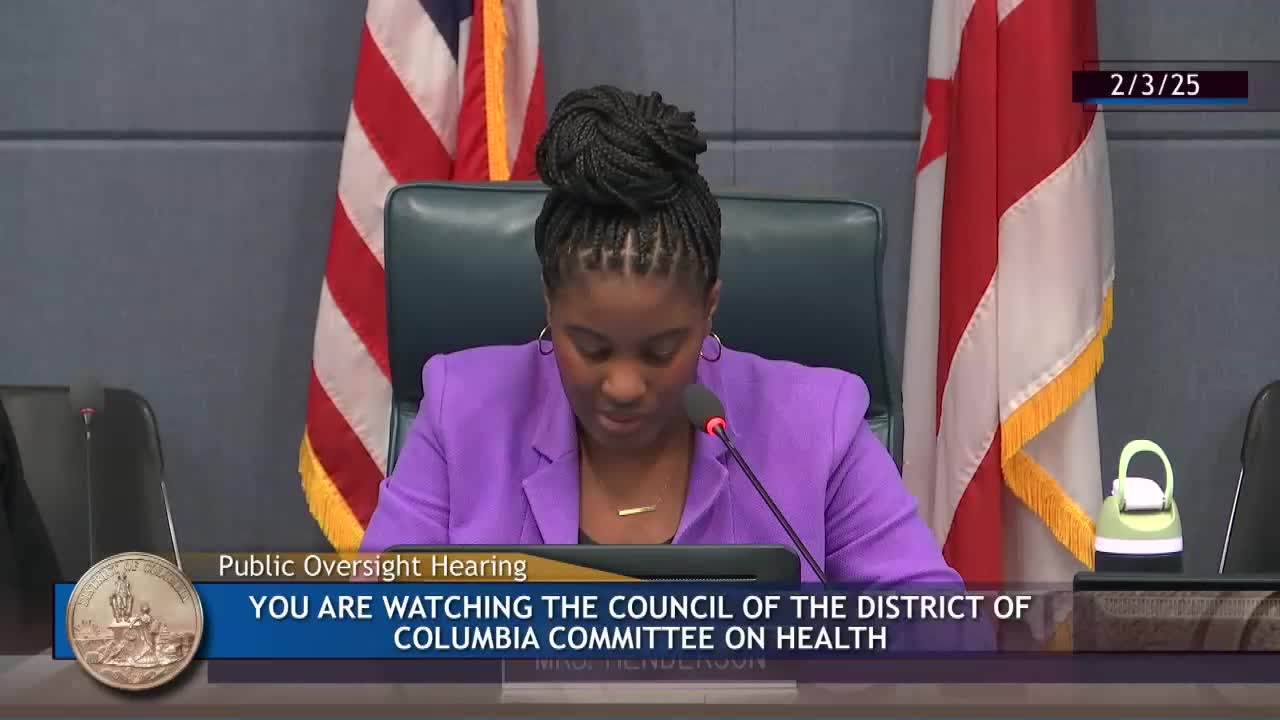
At a Feb. 3 oversight hearing, community groups and harm‑reduction advocates urged the Council and DBH to scale non‑police crisis response and invest in community‑based harm‑reduction infrastructure.
At a Feb. 3 oversight hearing, community groups and harm‑reduction advocates urged the Council and DBH to scale non‑police crisis response and invest in community‑based harm‑reduction infrastructure. Witnesses recounted local incidents — including a January 2024 police shooting in which family members say a crisis interaction escalated to a fatal outcome — to argue for expanded mobile crisis teams, 24/7 alternatives to EDs, and better promotion and staffing of the 988 crisis line.
Harriet’s Wildest Dreams and allied groups asked the committee to adopt or study the People’s Response Act or similar bills that make behavioral‑health first responders the default for mental‑health calls, not armed officers. ‘‘A crisis‑trained cop is still a cop,’’ said Jillian Burford of Harriet’s Wildest Dreams, urging a model centered on clinicians and community responders. Witnesses said DBH’s crisis response numbers show an incomplete shift: OUC diversions to DBH dropped (FY23: 28; FY24: 12) and DBH’s Crisis Response Team calls fell from 7,038 in FY23 to 5,671 in FY24.
Harm‑reduction advocates asked the city to fund community responders trained in mental‑health first aid and to pilot co‑located harm‑reduction centers (models cited: Cahoots/Eugene; OnPoint/NYC). Community members and outreach veterans urged more aggressive 988 promotion and integration between 988 and 911/OUC so dispatchers route mental‑health calls to DBH or mobile crisis teams where appropriate.
Why it matters: Witnesses argued that reliance on law enforcement for behavioral crises contributes to disproportionate use of force against people with mental illness and people of color. The committee flagged the need to coordinate DBH, OUC and MPD policies so diversion actually occurs in practice, not just in policy documents.
What’s next: Council members said they will press DBH and Office of Unified Communications on protocols, training and call routing thresholds and asked for data on CRT response times and 988 call outcomes.