Get Full Government Meeting Transcripts, Videos, & Alerts Forever!
Get email alerts on the School Finance topic
No spam. Unsubscribe anytime.
Senate education panel backs two-year extension of school cash-reserve limit
Summary
The Senate Education Committee on Jan. 30 advanced Senate File 137 to extend, until June 30, 2028, a 2022 provision allowing school districts to carry up to 30% of operating balances and cash reserves from one year to the next; the committee approved a "do pass" recommendation unanimously.
The Senate Education Committee on Jan. 30 advanced Senate File 137, a measure to extend a 2022 change that allows school districts to carry up to 30% of their operating balances and cash reserves from one year to the next.
Sponsor Senator Lloyd Dockstader told the committee the 2022 increase from a longstanding 15% limit was intended to help districts manage federal COVID-era funds and other timing mismatches; the provision is scheduled to sunset on June 30, 2026 under current law. "This extends the sunset date from June 30, 2026 to June 30, 2028," he said, adding the bill sets an effective date of July 1, 2025.
Committee members pressed the sponsor on the policy trade-offs. Senator Tim Rothfuss and others noted the underlying policy goal is that state foundation dollars be spent on current-year students; critics of large reserves say a large, persistent reserve could indicate money is not being used for current services. Dockstader and multiple witnesses said the extension is a cash‑flow tool, not an instruction to accumulate savings, and that smaller districts in particular can benefit from flexibility.
Representatives of the Department of Education and school finance stakeholders supported the extension in testimony. Dickie Schoenher, speaking for Superintendent Megan Degenfelder, said the superintendent supports the bill. Boyd Brown, executive director of the Wyoming Association of School Administrators, told the committee that reimbursement-based federal and state grants require districts to spend up front and wait for reimbursement, and that the June 30 snapshot used to measure reserves can be misleading for cash‑flow purposes. Jed Ciccarelli, chief financial officer for Laramie County School District 1, and Matt Flatt, chief financial officer for Natrona County School District, said reserves help districts manage payroll and large, irregular costs such as residential special‑education placements (which can reach six figures per student) and capital payables while awaiting state or federal reimbursements.
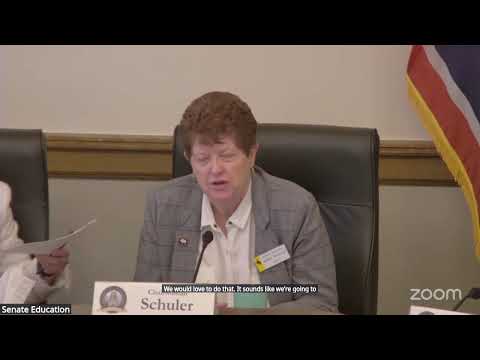
The committee moved the bill and approved a "do pass" recommendation by roll call vote. Clerk roll call recorded the committee result as five ayes with no no votes. The bill sponsor will carry the measure to the Senate floor.
What the bill does: Senate File 137 extends the date by which the 30% carryover authority sunsets (from June 30, 2026 to June 30, 2028), leaves Department of Education reporting and tracking requirements in place, and specifies an effective date of July 1, 2025. The sponsor said the statutory definition of capital construction in the bill does not include major building facility repair.
Why it matters: Administrators and district finance officers said the extension provides a short‑term way to manage uneven cash flows caused by reimbursement timing, enrollment shifts and large one‑time outlays. Opponents in questioning warned lawmakers to monitor reserve levels and to ensure funds intended for students are spent on students.
Action: Committee recommendation, "do pass"
Vote: Committee roll call (Senate Education Committee): Senator Bridal — Aye; Senator Olson — Aye; Senator Rothfuss — Aye; Senator Scott — Aye; Chairwoman Schueller — Aye. Outcome: approved for floor consideration.
Implementation: If passed by the full Senate and enacted, the bill as drafted would take effect July 1, 2025 and extend the statutory sunset to June 30, 2028.
Sources: Committee hearing transcript, Jan. 30, 2025; testimony from Department of Education and district finance officers.