Get Full Government Meeting Transcripts, Videos, & Alerts Forever!
Get email alerts on the Energy Solar Tax topic
No spam. Unsubscribe anytime.
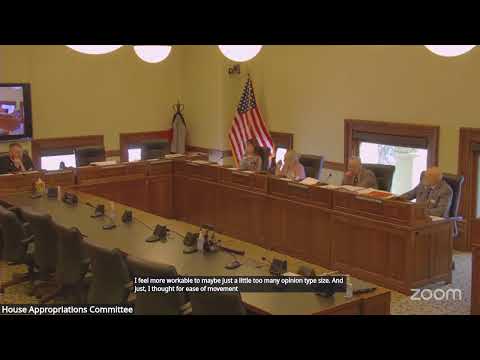
Wyoming committee hears bill allowing counties to tax solar production; public comment overwhelmingly opposes measure
Summary
Representative Lean introduced House Bill 305 to allow counties to impose an optional tax on solar production, saying the measure would remain a local decision and would exempt personal consumption and government‑owned facilities.
Representative Lean, the bill’s sponsor, told the Appropriations Committee that House Bill 305 would create a county-level, optional tax on solar energy production and leave administration to county commissioners and treasurers. He said the measure exempts electricity produced for a person’s own consumption and facilities owned by the federal government, the State of Wyoming or municipalities, and that revenues would be split 50–50 between counties and municipalities if a solar installation sits within a municipality.
The bill text, as read, assigns collection duties to county assessors and treasurers and allows counties to set penalties, liens and interest for delinquent taxes; it also authorizes counties to regulate payment and provides taxpayer remedies and a statute of limitations. Representative Lean said legal staff advised that sales back to the grid would not generally be taxed but offered to work with staff on clarifying amendments if needed.
Public testimony was uniformly critical. Robert Short, County Commissioner and vice president of the Wyoming County Commissioners Association, said the bill could create a “chilling effect” for independent power producers that negotiate long-term purchase power agreements (PPAs), some of which he said run 20 years. Short told the committee a 500-megawatt project proposed in his county already has financial models that could be disrupted if a county later imposes a tax. “They may not be able to have a calculable return on their investment,” Short said.
Industry and labor witnesses raised similar predictability concerns. Chris Brown of Powering Up Wyoming said a patchwork of county options would undermine stability that investors seek and risk pushing projects to nearby states that actively incentivize solar. Phil Cornella of the International Union of Operating Engineers warned that prior taxes on wind had reduced project activity and jobs. Cindy Delancey of the American Clean Power Association urged a broader legislative discussion before permitting 23 counties to “pick winners and losers,” and suggested, if the committee proceeds, capping the levy at $1 per megawatt-hour to match wind rather than the $5 per megawatt-hour or 5% gross-earnings figure discussed in testimony.
Renny McKay of the Wyoming Business Alliance and labor and solar‑industry representatives said the tax would harm business recruiting and local employment. Several witnesses urged clearer statutory language about appeals and credits for overpayments and asked how the measure would treat residential systems that export excess to the grid.
After public comment the committee did not take a motion to advance the bill. The chair noted the item “fails for lack of motion.”
The transcript shows the bill was discussed at length but received no committee motion to proceed; no formal vote was recorded.