Get Full Government Meeting Transcripts, Videos, & Alerts Forever!
Get email alerts on the Industrial Expansion topic
No spam. Unsubscribe anytime.
Taunton planning board hears long public comment on Dauphine Concrete; continues repetitive petition to Aug. 7 and asks law department to clarify vote threshold
Summary
Neighbors raised health and traffic concerns as Dauphine Concrete presented a revised, six‑bin conveyor plan for 120 Rear Berkeley Street. Planning staff and the petitioner emphasized the proposal differs from a prior fuel‑tank application, and the board continued the hearing to Aug. 7 and requested a law‑department ruling on the vote threshold for repetitive petitions.
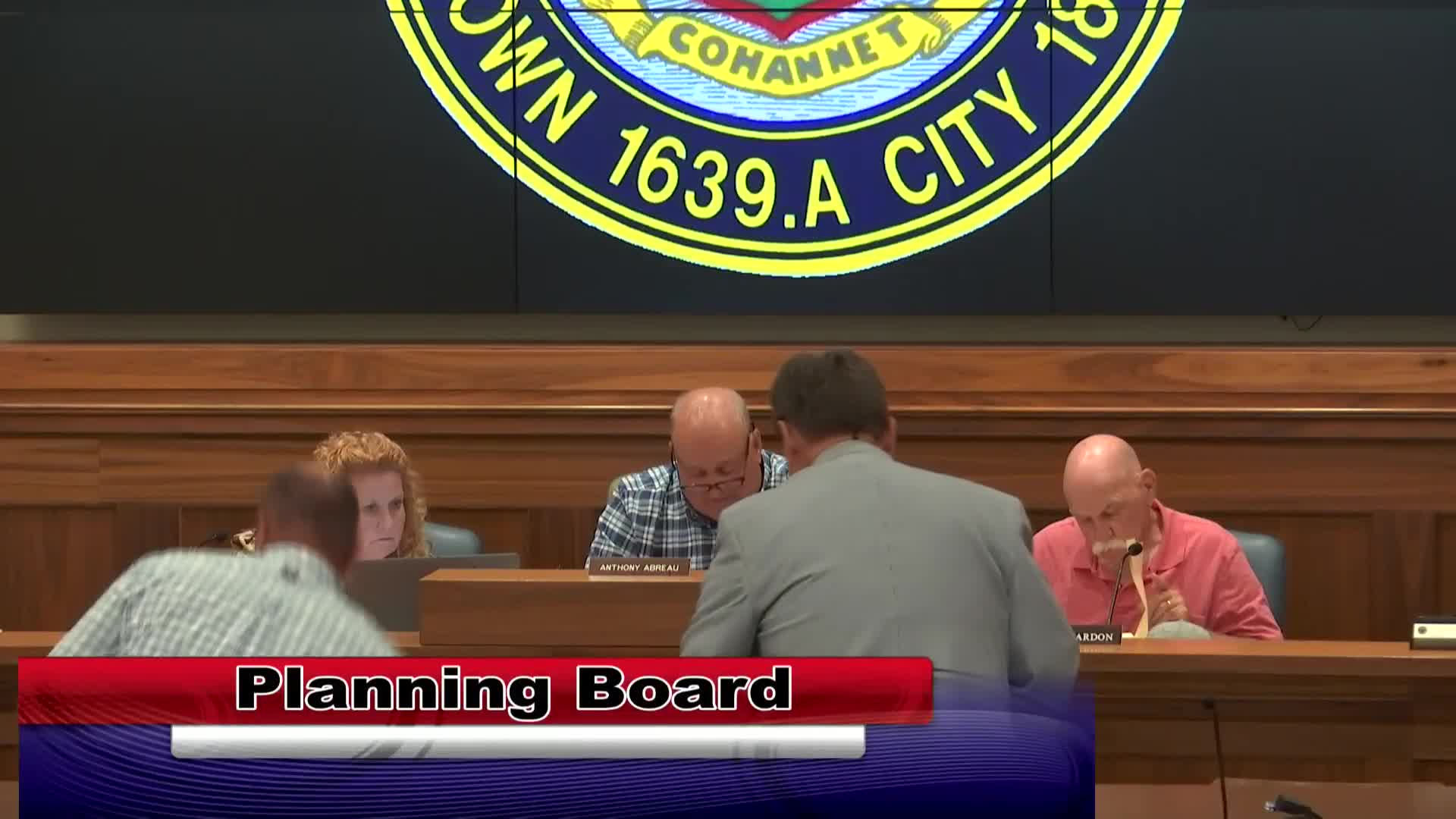
The Taunton City Planning Board on July 10 took testimony from the owner and attorney for Dauphine Concrete on a repetitive petition to allow the petitioner to refile to the Zoning Board of Appeals for changes at 120 Rear Berkeley Street. The board allowed a full presentation but left the public hearing open and continued the matter to Aug. 7 so an absent member may view meeting recordings; the board also asked the city law department to advise on the statutory vote threshold for repetitive petitions.
Presentation and procedural issue
Attorney Ed Brennan told the board the current proposal is materially different from the applicant’s earlier, denied request for above‑ground fuel tanks and instead would replace an aging conveyor and install a six‑bin, partially enclosed material‑handling conveyor to improve site function and reduce on‑site truck movements. Brennan asked the board to proceed with five members present and allow the absent member to view tapes and sign an affidavit later. Brennan said the board’s role is limited to deciding whether the new proposal constitutes a “specific and material change” from the prior petition.
Legal threshold and board decision
Board members and attorneys debated whether a repetitive petition requires consent by “all but one” of the full seven‑member planning board (six votes) or whether the present five members may proceed with the provisions that an absent member watch recordings and sign an affidavit. After discussion the board agreed to let the petitioner present, keep the hearing open, and continue the matter to the board’s Aug. 7 meeting so the absent member can review the record. The board voted to request a written opinion from the law department clarifying the vote requirement.
Extensive public comment
Neighbors and neighborhood groups provided prolonged public comment, citing concrete dust and silica exposure, heavy truck traffic, noise and vibration, and proximity to an elderly/disabled apartment complex across the street. Representative public comments included:
- John Lopes (19 Bond St.): “Silica's the number 1 killer... Give them 6 more bins, and it's gonna be 24/7.” - Lisa DaSilva (188 Berkeley St.): “This gravel pit has been nothing but a health hazard... It's in the air.” - Kathy Rodriguez (158 Berkeley St., Way Street Dust Busters): the neighborhood is an “officially designated environmental justice zone” and residents “bear an undue environmental burden.”
Petitioner response and mitigation steps
Owner Chris Dauphine said he has installed new dust‑collection equipment on every silo and at each truck‑loading point, invested in a water filtration and truck‑wash recycling system (he described roughly a half‑million‑dollar investment), removed much of the prior crushing equipment, planted vegetation and installed sprinklers to control dust, and offered to walk the site with neighbors. Dauphine said the bin‑and‑conveyor change would reduce front‑end loader activity and truck trips inside the site and that portions of the change will be enclosed to limit dust and noise.
Board direction and next steps
The board agreed to the following: (1) allow the petitioner's presentation to proceed tonight, (2) keep the public hearing open so the absent member can view recordings and sign an affidavit, (3) ask the law department for a written opinion on the jury‑style threshold for repetitive petitions, and (4) continue the hearing to Aug. 7 for further testimony and a jurisdictional vote. The board did not vote on the petition tonight.
Why it matters
Neighbors and public‑health advocates argue the proposed changes would increase truck traffic, activity hours, and airborne silica exposure in a dense, predominantly elderly and disabled neighborhood. The petitioner says the upgrades will reduce on‑site truck movements, replace failing equipment and reduce fugitive dust. The law‑department opinion and the continued hearing will determine whether the board has jurisdiction to forward the matter to the ZBA at the August meeting.