Get Full Government Meeting Transcripts, Videos, & Alerts Forever!
Get email alerts on the Zoning topic
No spam. Unsubscribe anytime.
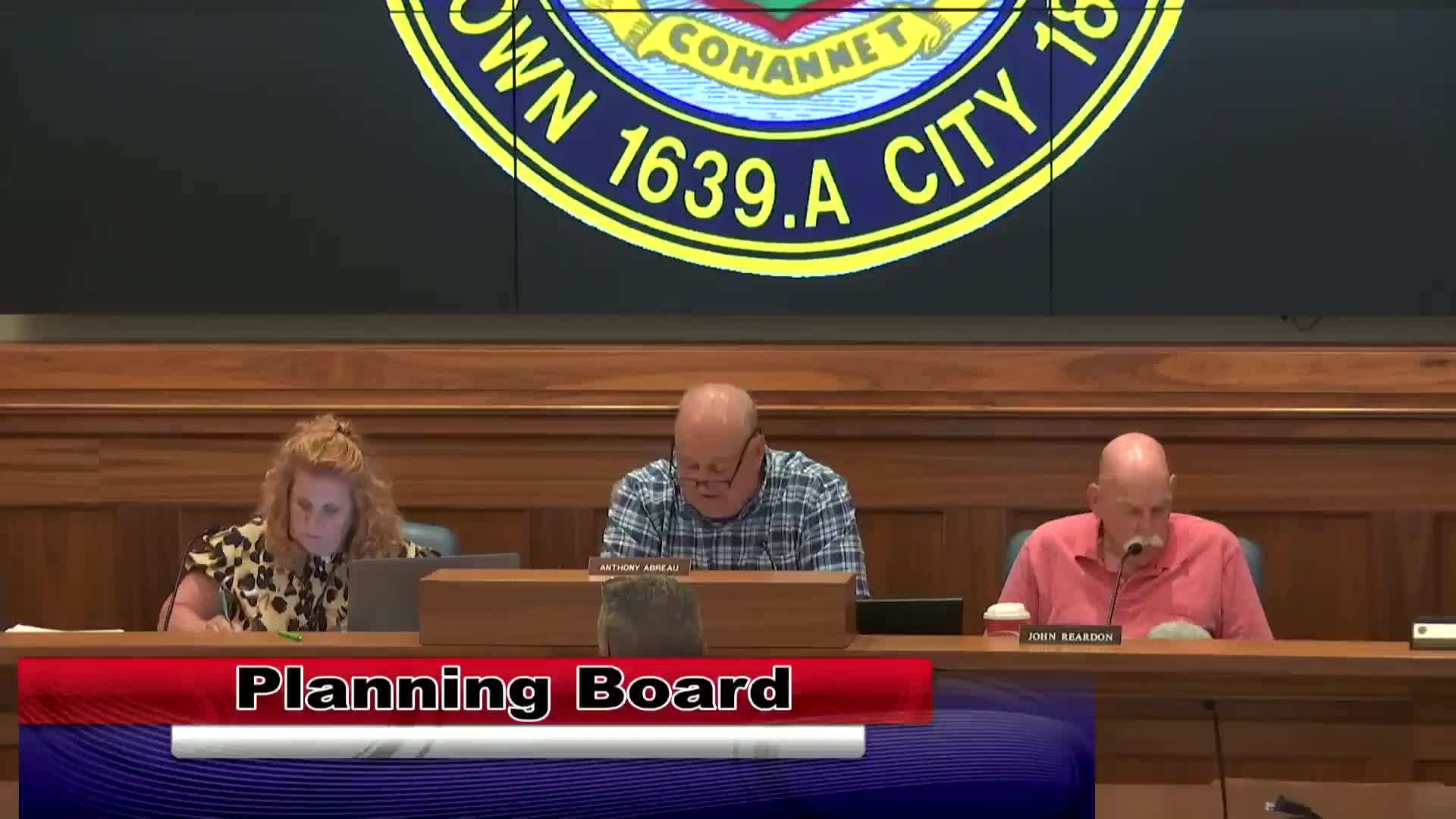
Taunton planning board backs changes to family/group‑home definition, mixed‑use wording; sends recommendations to City Council
Summary
The Taunton City Planning Board on July 10 voted to recommend changes to the city zoning ordinance that would reintroduce a numeric cap to the definition of “family,” simplify the group‑home definition, and update mixed‑use wording, forwarding the proposals to City Council for final action.
The Taunton City Planning Board on July 10 voted to recommend that City Council approve proposed amendments to the city zoning ordinance that would (1) reintroduce a numeric cap to the definition of “family” and (2) update wording for group homes and mixed‑use rules.
The board’s action followed a presentation from the city solicitor and staff. City Solicitor Matthew Costa read the law department’s analysis of state law and a recent Massachusetts Supreme Judicial Court decision, BAK Realty LLC v. City of Fitchburg, and said the law office “strongly supports the change in the definition to family and group home that under that are under consideration.” Costa told the board the change would allow congregate living establishments to be regulated as group homes and “prevent them from avoiding such requirements under the guise of civil family use.”
City Planner Kevin Scallum said the key change is “adding a number back into the definition of family. Right now, it doesn’t have a cap…. We used to have 1 but the courts had said that we had to keep following this Dover Act.” Scallum said the practical result is that “anybody who wants to come out with more than 4 will have to go to the council for a special permit.” He described the group‑home edit as a one‑sentence simplification and said the mixed‑use edits are housekeeping to reflect that the code now measures mixed‑use compliance by lot/project percentage rather than by structure.
Why it matters: The solicitor and planner said the changes implement a recent judicial clarification of the Dover Amendment and create a uniform set of rules across city departments so that certain congregate living arrangements (including those serving disabled residents) are evaluated under group‑home rules and any required special permits. In planning discussions, members noted the change would give neighbors more procedural protections when a large congregate facility is proposed.
Board action and next steps: The board voted to recommend the ordinance amendments to the City Council (sections identified by staff as 4‑42‑01 and 4‑40‑404 in the meeting materials). It took the Attachment 1 (use table / mixed‑use wording) item separately and voted to forward that text to the council as well; the board recorded the vote on Attachment 1 as 4‑yes, 2‑no. The council has the final authority to adopt or modify the ordinance.
Departments weigh in: Planning staff read department comments into the record. The city solicitor’s office authored the legal memo supporting the changes; the city engineer and conservation commission reported no objections.
What board members asked: Members pressed staff on how the mixed‑use percentage works downtown (planner: if a three‑story project has residential on the first floor, the project must still meet a 40% commercial share overall; a three‑story building would require roughly 33% commercial if evenly split by floor, while the project‑level rule requires 40%). The planner described the edits as “housekeeping” in part to correct language in the use table from “structure” to “lot.”
Timing: The planning board forwarded its recommendation to City Council; the council will set a public hearing and take the final vote.