Get Full Government Meeting Transcripts, Videos, & Alerts Forever!
Get email alerts on the Housing Policy topic
No spam. Unsubscribe anytime.
Commission studies inclusionary housing options; consultant flags feasibility trade-offs, in-lieu fees
Summary
The commission reviewed an economic feasibility and market study of a potential inclusionary housing ordinance; the consultant said a 15% target could be viable for many rental projects but could render some downtown for-sale proposals infeasible and that in-lieu fees would need careful calibration.
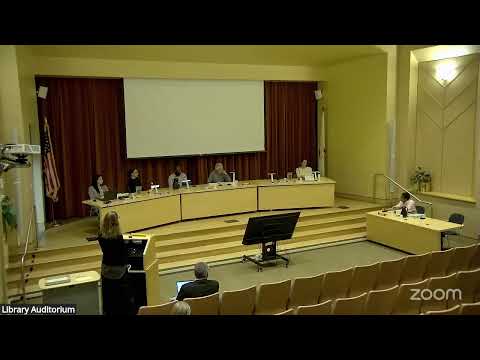
The Orinda Planning Commission held an extended study session on July 8 to review an economic feasibility and market study for a potential inclusionary housing ordinance (IHO), an implementing action of the city's 2023 housing element. Principal Planner Christine Thompson introduced the item; Dave Bergman of Lisa Wise Consulting presented the consultant's findings, modeled prototypes and preliminary policy options.
The consultant framed an IHO as a land-use regulation (not a fee) and noted AB 1505 (the "Palmer fix") and subsequent state guidance require rental projects to have an alternate compliance option (typically an in-lieu fee). The team tested three project prototypes: a 100%-residential RH40 multifamily project (surface parking), a downtown commercial mixed-use project (structured or non-surface parking), and a single-family prototype under RL10. Key findings: rental prototypes in RH40 and downtown commercial could be feasible with a 15% inclusionary share targeted at 80% of area median income (AMI); downtown for-sale projects were thinner financially and some became infeasible if required to provide 15% of units at 80% AMI; single-family prototypes became infeasible even with a single inclusionary unit because of high land/lot costs.
The consultant presented preliminary options for the commission's feedback: a 15% inclusionary percentage would align with Metropolitan Transportation Commission (MTC) transit-oriented communities (TOC) guidance but could deter some for-sale development; applying an IHO exclusively within a TOC overlay (half-mile of the BART station) is allowed but would omit other multifamily-zoned areas; a size threshold of projects of 11 or more units was proposed (reflecting state policy that 10 or fewer units are often "naturally occurring" affordable), though commissioners discussed lower thresholds used by nearby jurisdictions; income targeting recommendations suggested 80% AMI as a baseline with flexibility options and monitoring requirements; in-lieu fees were discussed as a compliance option for rental projects, with the consultant noting the theoretical maximum per-unit fee from capitalization calculations could be on the order of hundreds of thousands of dollars (the study's high-end illustrative figure was approximately $540,000 per unit), while many neighboring cities use substantially lower fees or per-square-foot approaches to keep fees workable for developers.
Consultant recommendations and common practices identified in the study session included: consider a 15% target for affordability as a starting point (with caveats), apply the ordinance to multifamily and mixed-use projects (and weigh treatment of for-sale projects), establish a size threshold to limit application to larger projects (staff suggested 11+ units for discussion), create a third-party administration approach for affordability controls (to avoid burdening city staff), require deed restrictions for affordability periods (typical stretches cited: 55 years for rentals, 45 years for ownership), and exempt required affordable units from city impact fees as an incentive. The consultant noted MTC TOC policy can affect eligibility for certain regional discretionary funds and recommended commissioners consider whether Orinda will aim to align with the TOC standard.
Commissioners asked for clearer decision principles to guide choices (e.g., what kinds of housing the city wants to encourage, whether to prioritize rental vs. for-sale, whether to apply citywide or only in TOC areas), requested side-by-side comparables with neighboring cities that list thresholds and in-lieu fees, and raised concerns about parking, financing, and interactions with the Downtown Precise Plan. Several commissioners and staff emphasized the need to clarify the policy's primary goals (who the city intends to benefit) before selecting detailed parameters.
Next steps: staff and the consultant will prepare a recommendations memorandum for City Council, supply a consolidated comparison chart of neighboring jurisdictions' IHO thresholds and fees, and return with refined options and proposed ordinance language if the City Council elects to proceed; a referendum on rezoning and additional analysis tied to the downtown precise-plan rezoning work is expected in coming months.