Get Full Government Meeting Transcripts, Videos, & Alerts Forever!
Get email alerts on the Housing Incentive Policy topic
No spam. Unsubscribe anytime.
Pataskala committee debates TIF terms and a city-led NCA in housing incentive policy update
Summary
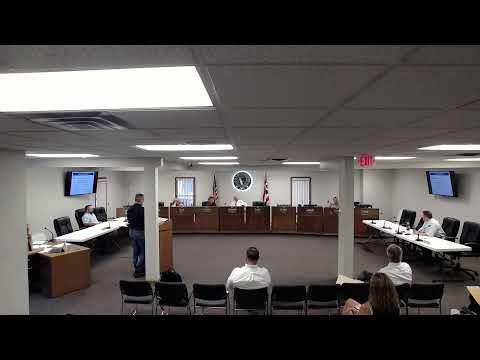
At a Pataskala City development committee meeting, staff presented proposed changes to the housing incentive policy focusing on TIF terms and compensation to the fire district.
At a Pataskala City development committee meeting, staff presented proposed changes to the city's housing incentive policy, focusing on tax-increment financing (TIF) terms and how developers and local service districts would be compensated.
Nate Green, staff member, said the draft continues the "hundred percent 30 year non school TIF" structure and described a proposed pilot to provide the Western Licking Joint Fire District with a payment equal to 30% of what the fire district would have received without the TIF in place. "One of the things that we have discussed was doing a pilot... essentially a 30% pilot," Green said.
Committee members questioned whether a fixed percentage is appropriate for residential projects. Several members noted 30% is commonly used when school districts receive pilot payments for industrial or office TIFs, but they had not seen a standard pilot applied to residential projects. One member suggested requiring developers to negotiate an agreed pilot directly with the fire district and bring that agreement to council for approval; the committee discussed allowing alternatives such as in-kind contributions (for example, donated land or apparatus) in lieu of a cash payment.
The draft also clarifies what TIF proceeds may fund. Staff said the language was edited to allow TIF funding for off-site infrastructure while limiting on-site infrastructure funding to situations where on-site work produces a regional benefit.
The committee discussed whether NCAs should be per-developer or city-led. Under the current draft, individual NCAs would be created per development; staff proposed an alternative in which the city would initiate and control a master NCA and developers would join that NCA. Proponents said a city-led approach would give Pataskala greater control over how NCA dollars are spent; others cautioned that NCAs add a development charge that ultimately is borne by homeowners.
Committee direction: members asked staff to revise the document to (1) include language that opens negotiation with the fire district as an alternative to a set percent pilot, (2) confirm the infrastructure funding limits for on-site versus off-site work, and (3) bring back the revised draft plus a more detailed discussion of a potential city-led NCA at a future development committee meeting.
The committee did not take a formal vote on the policy changes; staff indicated they would return with edits and additional discussion.