Get Full Government Meeting Transcripts, Videos, & Alerts Forever!
Get email alerts on the Zoning Consolidation topic
No spam. Unsubscribe anytime.
Salt Lake City council pauses decision on citywide MU zoning consolidation after extensive public comment
Summary
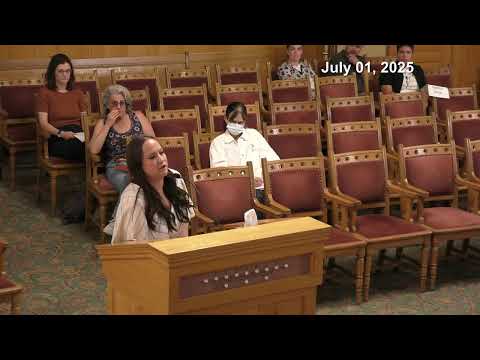
On July 1, 2025, the Salt Lake City Council held a continued public hearing on a proposal to consolidate commercial, industrial, and mixed-use zoning into six mixed‑use (MU) districts. More than a dozen residents, business owners and preservation advocates testified; the council closed the hearing and deferred action to a future meeting.
Salt Lake City held a continued public hearing July 1 on a proposed overhaul of the city's zoning code that would consolidate multiple commercial and mixed‑use districts into six new mixed‑use (MU) zones. Nick Tarbet, deputy council director, said the proposal aims "to simplify zoning regulations, improve clarity of language, and incorporate missing designs."
The hearing drew roughly 11 public commenters who raised sharply different concerns about the proposal's likely effects on industrial businesses, neighborhood scale and historic properties. Several business owners from south Salt Lake City said reclassifying existing M1 industrial parcels to mixed‑use would create safety problems and could force longstanding firms to move. "I absolutely oppose rezoning Seventh West away from its current M1," said Clay Smith, who identified himself as a warehouse owner with OGNS Sales, adding that "53‑foot trucks" and heavy truck traffic are integral to his operation and customer access within a roughly 45‑mile radius. Jose Rubalcaba, a branch manager for New Cross Rebar Fabrication, said his facility employs about 70 people and that adding multifamily housing to the same streets would create safety and congestion risks and harm the company's ability to serve infrastructure projects.
Preservation advocates said the proposal could create uneven protections for historic properties. Cindy Cromer told the council the consolidation would create "two classes of historic properties" by guaranteeing setbacks and stepbacks only for city‑register sites while leaving properties in the Central City Historic District without the same statutory protections. Ben Engel, a resident at the Hollywood Condominiums, urged clearer, more specific standards so developers and reviewers do not repeatedly seek variances.
Residents from Sugar House focused on height limits and neighborhood scale. "When the allowed height of projects in the Sugar House Business district balloons from between 85 or 110 feet to 150 and possibly 186 feet, whose desires are being met?" Lynn Shorts asked, arguing that many blocks should instead be zoned MU6 or MU8. Several commenters raised parking and transit concerns, warning that underbuilt transit and limited parking could reduce retail viability if large multifamily buildings are concentrated without coordinated parking or UTA service changes.
Others urged that the code be written so plan review and design review do not undermine predictable outcomes. Architect and resident Jason Wheeler said consolidation "will really facilitate better and stronger development," while Annie Isaacson asked the council to prevent developers from using design review to add height or to alter setbacks beyond the published code.
After public testimony, Councilmember Pui moved to close the public hearing and defer action to a future council meeting; Councilmember Dugan seconded the motion, which passed unanimously. No final rezoning or map changes were adopted at this meeting.
Why it matters: The consolidation is intended to simplify a fragmented zoning code and to set citywide expectations for mixed‑use development, but speakers told the council the draft risks displacing industrial uses, weakening protections for some historic properties, and allowing taller, denser projects in neighborhoods that expect lower heights. The council's decision to defer action indicates staff and elected officials will have additional opportunity to address the concerns raised during public comment.
What happens next: The council closed the hearing and will take up the item at a later meeting. Staff and council members did not announce a new date during the meeting. The record of public comment and the edits requested at the hearing will be part of the public file when the item returns to council.