Get Full Government Meeting Transcripts, Videos, & Alerts Forever!
Get email alerts on the Public Health Anti Poverty topic
No spam. Unsubscribe anytime.
Lawrence‑Douglas County outlines anti‑poverty goals in Community Health Improvement Plan
Summary
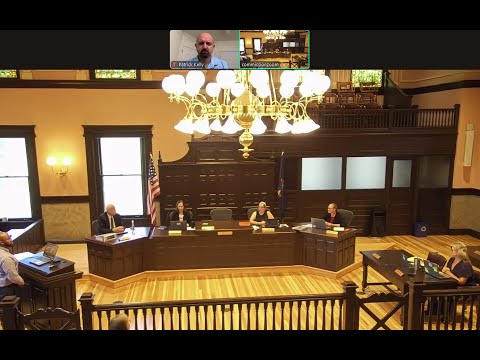
Lawrence‑Douglas County Public Health and community partners presented the anti‑poverty component of the Community Health Improvement Plan (CHIP) to the Douglas County Commission on July 2, 2025, outlining short‑term pilots and longer‑term goals aimed at improving economic stability for single female‑headed households.
Lawrence‑Douglas County Public Health and community partners presented the anti‑poverty component of the Community Health Improvement Plan (CHIP) to the Douglas County Commission on July 2, 2025, outlining short‑term pilots and longer‑term goals aimed at improving economic stability for single female‑headed households.
"The CHIP is our...community shared road map for creating conditions where everybody can thrive," said Jonathan Smith, executive director of Lawrence‑Douglas County Public Health, explaining that the plan is a collaborative effort among county, city, health and nonprofit partners rather than a single‑agency plan.
The presentation emphasized ALICE (Asset Limited, Income Constrained, Employed) data for Douglas County. Research associate Sarah Obermeyer said a sample ALICE survival budget for a single adult with two young children would require about $69,420 in annual earnings, compared with a median income of $45,425 for single female‑headed households. Obermeyer reported that 64% of single female‑headed households in Douglas County fall below the ALICE threshold.
Presenters described specific strategies and targets: a guaranteed‑income pilot targeted to low‑income women who are pregnant or have young children with the aim of conducting a pilot by 2027; a countywide community navigator/community health worker program intended to raise the percentage of eligible single female‑headed households using SNAP or WIC from about 10% to 50%; and a proposed community childcare scholarship fund to reduce families' childcare costs.
Caitlin Piney of K‑State Research and Extension described community engagement steps already taken, including data walks and a $10,000 grant to host community conversations and screenings about guaranteed income. Brett Martin of United Way of Kaw Valley said the navigator strategy is intended to integrate existing services across CHIP focus areas — housing, birth outcomes and food security — to reduce barriers created by siloed human‑services systems.
Marie Taylor, executive director of Positive Bright Start, provided local childcare cost figures used in planning: about $825 per month for a 4‑year‑old, about $1,000 for toddlers and roughly $1,200 for infants. Taylor said Positive Bright Start operates a longstanding scholarship program and typically maintains a wait list of about 30 families seeking assistance. Kevin Kelly of Peaslee Tech described workforce and apprenticeship approaches aimed at professionalizing early‑childhood jobs and closing the wage gap for childcare workers.
Commissioners asked technical questions about the ALICE data and related labor statistics; presenters offered to share citations and additional data in follow‑up. Staff noted that some anti‑poverty strategies intersect with A Place for Everyone, the county's housing initiative, and that future cross‑jurisdictional coordination could be explored.
The presentation was informational; no county action or vote was required. Presenters said the CHIP implementation group plans annual community updates and continuing partner engagement.