Get Full Government Meeting Transcripts, Videos, & Alerts Forever!
Get email alerts on the Courts topic
No spam. Unsubscribe anytime.
Bourbon County judges tell commissioners state pays salaries but county must fund court operations
Summary
District court leaders told the Bourbon County commissioners on May 1 that Kansas law requires counties to fund most court operations even though the state pays judges and other court employees'salaries.
District court leaders told the Bourbon County commissioners on May 1 that state law requires counties to fund most court operations even though the state pays judges and other court employees' salaries. District Judge Sarah Stewart and court clerk Michelle Sharp outlined the court's 2026 request and explained why a modest budget increase is needed.
Under the statute cited during the briefing, "except for expenses required by law to be paid by the state, the state pays our salaries," the presenter said, then read a county obligation to "adequately fund the operation of the district court." The court representatives said the county pays most contractual services used in the court, including court-appointed attorneys in child-in-need-of-care cases, care-and-treatment proceedings, juvenile offender hearings and some misdemeanors where jail is possible.
Why it matters: Many of those appointed-attorney costs are mandatory under state law, the presenters said. The court contracts with local attorneys on flat monthly fees to manage predictable spending, but conflicts and complex jury trials can require hiring outside lawyers at an hourly rate. Presenters said outside counsel is sometimes paid at the $120-per-hour rate used in state-appointed felony cases.
The court asked commissioners to approve a 2026 operating budget that is roughly $9,959 above the prior year's level, with a total in the neighborhood of $3,040,349.50. Most of the requested increases involve contractual services, supplies and small salary adjustments for two county-paid security officers: the court requested 5% raises for those two positions, amounting to about $3,000 total.
Presenters also cited three other near-term costs: a small increase for office equipment and rentals (chairs, copy-machine rental), a small rise in service contracts for the court's computerized recording system ("Liberty"), and routine repairs and supplies.
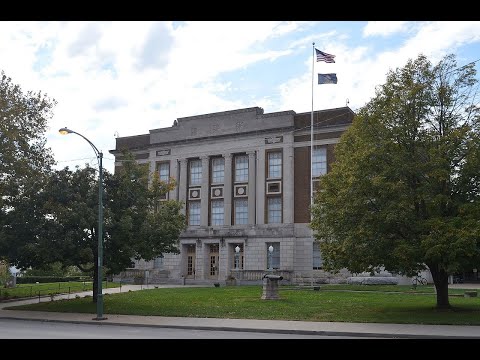
Courtroom access and operations: Judge Stewart said elevator outages at the courthouse have already affected court operations. She said an elevator failure forced her to postpone a jury trial that had 45 jurors scheduled and raised the prospect the next scheduled felony jury (65 jurors) could create a speedy-trial problem if the court cannot secure an accessible space for the next setting. Commissioners asked who oversees repairs; staff identified the county's head of maintenance as the contact and said a part was expected to arrive and repairs were scheduled.
Recruitment pressure on legal services: The presenters said rural counties face difficulty recruiting lawyers willing to accept contract rates for public appointments. To control costs and provide predictability, the court uses flat monthly contracts with a small number of local attorneys, supplemented by hourly appointments when conflicts arise or complex trials require additional work.
What commissioners asked for: Commissioners requested clearer itemized tracking of court expenses and asked whether some services (for example, postage and mail processing) could be consolidated in a county central mailroom to reduce duplication. Clerk Michelle Sharp said the court uses a state-paid transcriptionist and a local payment program for invoices, and that consolidation into a shared county postage meter would be feasible if the commissioners direct it.
Looking ahead: The court said the requested increases are small relative to the total budget and urged the commission to recognize the state-mandated nature of many expenses. Judge Stewart warned that continued maintenance issues in the courthouse could create operational disruptions that carry legal consequences, such as potential speedy-trial dismissals if jury sittings cannot proceed.
Speakers quoted or identified in this article are: District Judge Sarah Stewart (first referenced at 00:00:00) and Michelle Sharp, clerk of the district court (first referenced at 00:00:00).