Get Full Government Meeting Transcripts, Videos, & Alerts Forever!
Get email alerts on the State Legislation topic
No spam. Unsubscribe anytime.
County staff outline bills in 89th Texas Legislature that could affect Collin County
Summary
Deputy County Administrator Russell Shofner summarized a set of bills in the 89th Texas Legislature that county staff say could create unfunded mandates, alter judicial oversight and magistrate procedures, change juvenile detention funding, increase judicial pay, and expand a food-truck permitting pilot to large counties.
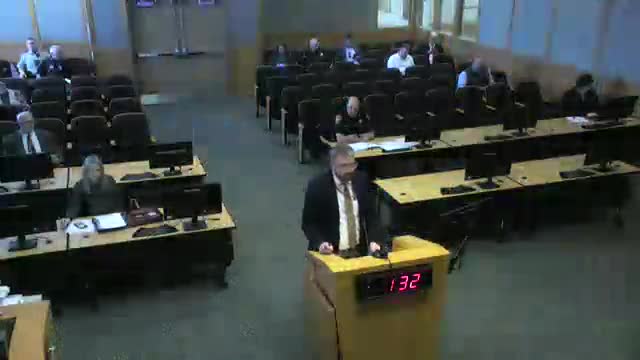
Russell Shofner, deputy county administrator, briefed the Collin County Commissioners Court on a selection of bills in the 89th Texas Legislature that county staff are tracking and which they say could affect county operations.
Shofner said staff prepared a memo for the court listing bills of concern. He flagged SB 160 (Menendez) as a potential unfunded mandate that would require counties with populations of 1,000,000 or more to establish a senior justice assessment center staffed by a mix of aging-services and criminal-justice partners. He told the court the county should be aware of the potential cost implications.
Shofner also summarized SB 293, which would expand the State Commission on Judicial Conduct's authority on judicial discipline, and noted a separate proposal that would raise district judges' salaries by about $21,000 (from roughly $140,000 to $161,000) if enacted. He described SB 297 as a measure that could require counties to pay or reimburse costs tied to confidential communication structures, another potential local expense.
On juvenile detention, Shofner said SB 468 would require the Texas Juvenile Justice Division to compensate counties when the division holds juvenile defendants longer than 30 days, reversing a prior practice that left counties holding costs when defendants exceeded a 30-day period. He described SB 664 as comprehensive magistration legislation and said Collin County's unique local magistrate structure could complicate how disciplinary referrals would be handled under that bill.
Shofner also noted HB 1449, which would expand a prior pilot that allows a food truck vendor with a valid county permit to operate in any city within the same county, currently bracketed to Tarrant and Dallas Counties, to all counties with populations of 1,000,000 or more.
Commissioners emphasized the need for a presence in Austin to track and, if necessary, testify on bills that would create new county obligations without accompanying funding. Commissioners also asked staff to keep the bill update on the public agenda each week and to add any additional bills the court wants tracked. Several commissioners raised concerns about possible future legislation affecting extraterritorial jurisdiction (ETJ) and fire districts and asked staff to monitor those proposals.
No formal county action was taken on any of the bills during the meeting; staff will continue to track the measures and report back to the court.