Get Full Government Meeting Transcripts, Videos, & Alerts Forever!
Get email alerts on the Housing topic
No spam. Unsubscribe anytime.
Tacoma committee reopens MFTE questions: unit size, AMI levels and extensions under review
Summary
Committee members and staff examined the city’s multifamily tax-exemption (MFTE) program, discussed benchmarking and feasibility work that supported selecting 70% AMI with 20% of units as the preferred affordability target, and debated whether to limit 8-year exemptions, require larger unit sizes for family housing, or change extension standards.
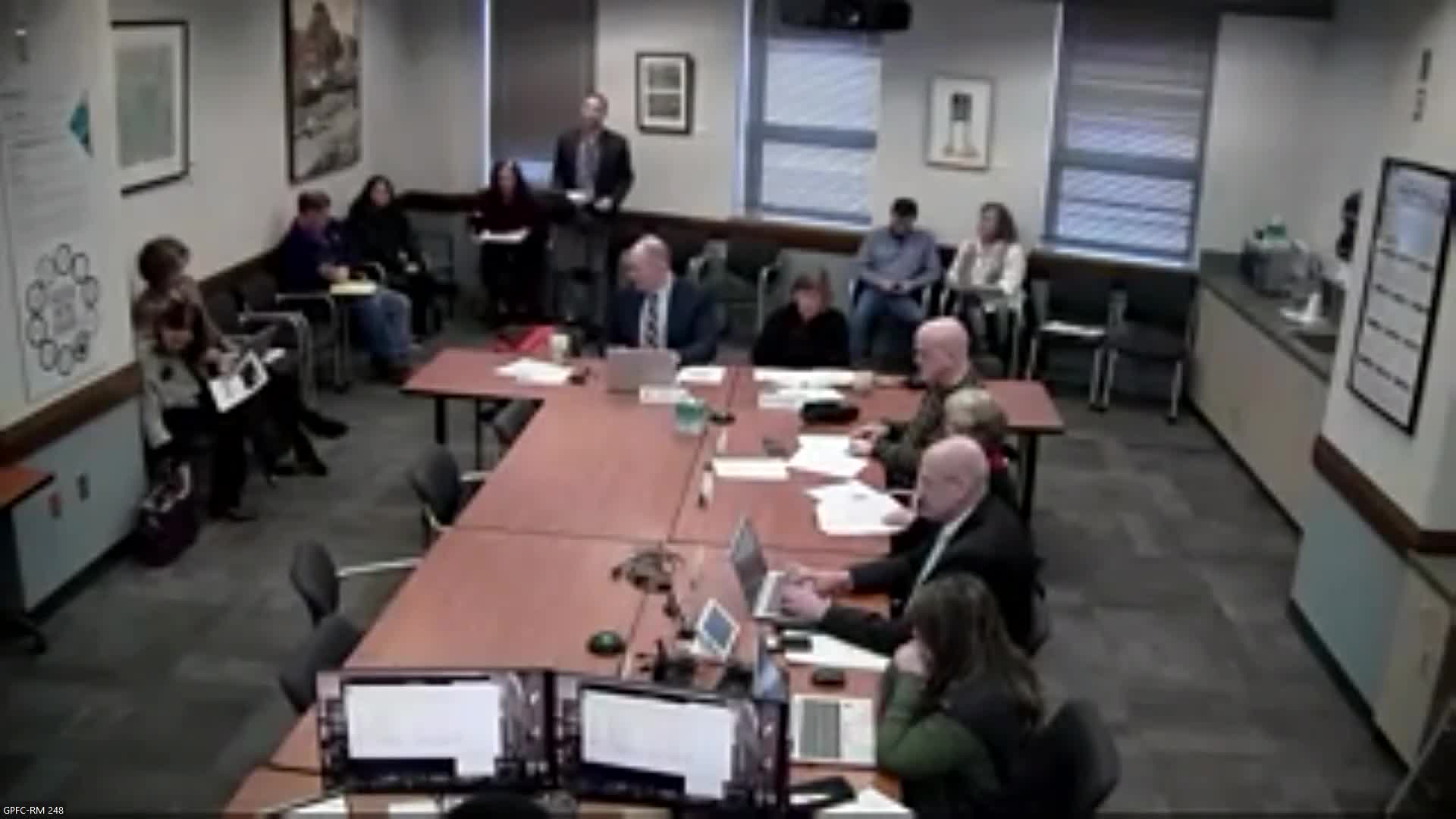
City staff briefed the Government Performance & Finance Committee on Jan. 21 about the history and use of Tacoma’s multifamily tax-exemption program and the interaction between MFTE and recent land-use incentives in the homeinTacoma package.
Council Member Hines recapped changes adopted in 2021 and told the committee the city included a three-year study clause to measure results. Debbie Bingham (Community & Economic Development) and Ted Richardson (Office of Strategy) reviewed feasibility analysis and benchmarking with regional cities. Richardson explained that staff and consultants held the years of affordability and the percent of units affordable constant in order to test different Area Median Income (AMI) targets. He said two tested scenarios performed best in modeling: 20% of units at 70% AMI (the option planning staff recommended to the Planning Commission and the council) and a split scenario with 15% at 70% AMI and 5% at 50% AMI for deeper affordability in larger projects.
Committee members raised multiple concerns and policy questions: whether MFTE is producing mostly studio and one-bedroom units (and how to encourage more family-sized two- and three-bedroom units), whether the city should remove or limit 8-year exemptions in gentrifying neighborhoods, and what a reasonable required discount below market rate should be for projects seeking extensions of existing exemptions. Data presented to the committee showed current projects under construction included a high share of studio and one-bedroom market-rate units (the committee noted far fewer two- and three-bedroom units in the pipeline), and members discussed square-footage or bedroom-count approaches as possible ways to incentivize family-size units.
Deputy Mayor Daniels and others asked for clearer, neighborhood-level data. Committee members requested additional analysis linking MFTE use to neighborhood displacement risk and asked staff to prepare stakeholder outreach on candidate policy changes. Several members emphasized the risk that adding more requirements could reduce the number of developments that pencil financially.
Staff described next steps: prepare additional feasibility and neighborhood analyses, conduct targeted stakeholder outreach and return with options for the committee roughly one month after Jan. 21 so the committee can refine policy choices prior to broader citywide engagement. Council Member Hines said the city will monitor projects using the 12-year MFTE and report back, using the three-year study clause required by the homeinTacoma ordinance to assess real-world take-up and impacts.