Get Full Government Meeting Transcripts, Videos, & Alerts Forever!
Get email alerts on the Education topic
No spam. Unsubscribe anytime.
Education commissioner credits formula increases and one‑time funds for rising NAEP ranks, details K–12 investments and school‑safety work
Summary
Commissioner Lizette Reynolds summarized federal and state investments in K–12 schooling since 2020, highlighted NAEP gains in Tennessee, and described how recurring teacher‑pay increases, ARPA/ESSER dollars for tutoring and literacy, school‑safety and mental‑health investments flow to districts.
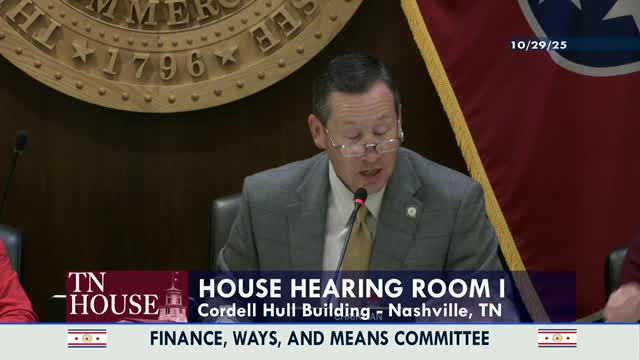
Lizette Reynolds, Tennessee’s commissioner of education, told the Finance, Ways and Means Committee on Oct. 29 that investments since 2020 have increased per‑pupil spending and produced gains on national tests as districts use state, federal and one‑time funds for literacy, tutoring and school safety.
What the department reported: Reynolds said Tennessee has added about $2.3 billion in recurring state funds to the school‑funding formula since 2020 plus more than $1.2 billion in one‑time state investments and roughly $1.3 billion annually in recurring federal grants (ESEA, IDEA, Perkins, school nutrition). She also described how roughly $3.9 billion in federal COVID relief funds (ESSER/ARPA) were distributed, with about 90% flowing directly to districts to stabilize operations, remediate learning loss and accelerate recovery (03:29:29).
NAEP and outcomes: Reynolds said Tennessee students’ national standing has improved: 2024 NAEP scores put Tennessee among the top 25 states in both grades 4 and 8 in reading and math, an outcome she credited to sustained investments and district use of tutoring and literacy programs. The department also summarized state investments: recurring teacher pay increases that move the minimum salary toward $50,000, paid parental leave, universal early reading screeners and summer programming support. On the one‑time side, Reynolds highlighted $529 million for innovative school models, $198 million in teacher bonuses and $6.086 billion for charter facilities over time (03:29:29).
School safety, mental health and SROs: The department said school‑resource‑officer (SRO) grants have been popular and that a recent small decline in SRO placements was driven by retirements and local recruitment shortages rather than by programmatic changes. The department and Committee also discussed school‑based behavioral health liaisons that have been funded through the K–12 mental‑health trust; the department said the liaisons are expanding capacity for districts and that several districts have reported positive outcomes (03:29:29).
Per‑pupil spending: Chief Financial Officer Mary Ann Dursky said the figure often cited for the TISA base (roughly $7,000) is a base component of the funding formula; total per‑pupil spending in Tennessee (state + local + federal) is a higher number calculated from district expenditure data. The department reported a 2024 statewide average per‑pupil spending figure of roughly $13,658 (03:29:29).
Accountability and curriculum resources: Committee members pressed the department about pacing of instructional materials tied to new standards. Chief Academic Officer Christy Brown said the state is in the first year of an eight‑year implementation cycle for new science standards; the department said that crosswalks, training modules and high‑school instructional focus documents are available and that middle‑ and elementary‑level instructional resources are in development.
Bottom line: Education officials told the committee that combined state and federal investments since 2020 have enabled districts to restore services, hire staff, fund tutoring and literacy interventions and focus on safety and mental health; the department said it will continue to supply districts with curricular resources and update the committee on outcomes.