TDOT tells panel it is delivering record contract lettings but warns long‑term funding will fall when TMA/Q funds expire
Loading...
Summary
Transportation Commissioner John Reed told the Finance committee the department has improved project delivery and is on track for historically large contract lettings, but said Tennessee’s long‑term capacity depends on sustaining state funding because federal revenue has restrictive eligibility and is not indexed to inflation.
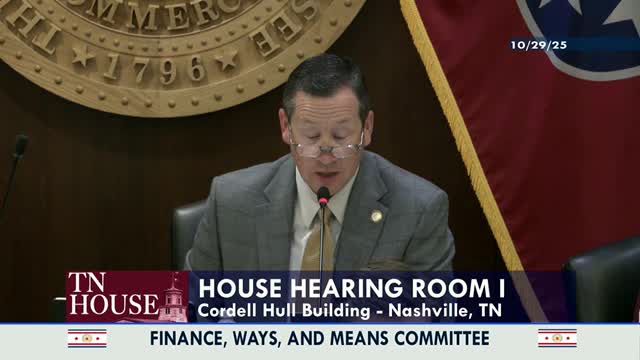
Tennessee Department of Transportation Commissioner Robin Reed told the House Finance, Ways and Means Committee on Oct. 29 that TDOT is increasing delivery of roadway projects and using recent one‑time and recurring state funds to accelerate resurfacing, spot‑safety and capacity projects while preparing for a return to lower spending levels once temporary funds expire.
Reed said the agency’s priorities are "delivery of our program, development of our staff, and system modernization," and highlighted that TDOT’s delivery rate — projects listed in the highway program actually let to contract — has improved from roughly the national average to more than 90% in recent years (01:07:47). He said internal reforms, process improvements and better cost estimating generated savings that allowed TDOT to restore additional resurfacing jobs.
Major projects and financing: Reed highlighted two large projects readers should know about: the King’s Crossing Bridge in Memphis — described as TDOT’s largest single contract to date, at about $1 billion with grant support — and the I‑24 choice lanes between downtown Nashville and Murfreesboro, a multibillion‑dollar managed‑lanes project that TDOT estimates will be valued above $4 billion in construction and represents a new delivery and revenue approach for the department (01:07:47; 01:15:21).
Why it matters: Reed emphasized Tennessee’s roughly 50/50 split between federal and state transportation funding and warned that federal gas taxes have not been raised or indexed since 1993. He said that state revenue flexibility allows Tennessee to meet local needs and that TDOT will participate in federal reauthorization debates to preserve state flexibility (01:17:01). Reed noted that several nearby states fund a larger share of transportation from state sources and that Tennessee’s choices on funding will determine whether the department can maintain the higher level of construction activity when TMA and other transfers wind down.
Mega‑site and Blue Oval: Committee members asked about the West Tennessee megasite and infrastructure for the Blue Oval (Ford) suppliers and production. TDOT staff said wastewater and drinking water plants are operational, many buildings have been constructed, and a rail spur is among remaining items. TDOT said 37 positions funded to support the mega‑site remain dedicated to the site for permitting and oversight, though the department may reallocate positions as needs change (01:01:48; 01:39:26).
Delivery and workforce: Reed credited internal initiatives (EPIC) and improved human‑resources practices with raising staff retention (turnover down from ~17% to under 5%) and with enabling TDOT to expand delivery. He said procurement for rural service patrols (motorist assist) is underway and that those operations should lower crash consequences and delays on rural interstates (01:07:47).
Grants and discretionary funding: TDOT staff reported more than $863 million in discretionary federal grants secured since 2021, including the multi‑hundred‑million dollar grant for the Mississippi River crossing in Memphis; the department said it is focused on larger federal opportunities that can be leveraged with state funding (01:39:26).
Bottom line: Reed argued that Tennessee’s current high rate of contract awards is an opportunity driven by recent one‑time funds, but that maintaining higher annual construction activity long term will require decisions about recurring state revenue or new financing approaches. Committee members pressed DOT on project sequencing (e.g., June Lake interchange and parallel corridor needs) and impacts on local traffic while also raising concerns from constituents about specific corridors and Blue Oval impacts.