Get Full Government Meeting Transcripts, Videos, & Alerts Forever!
Get email alerts on the Land Use topic
No spam. Unsubscribe anytime.
Council advances 10 Mile overlay with exception allowing Tisdale parcel to opt out
Summary
After public comment from Thomas Tisdale Sr. and others, Charleston County Council voted to advance a package of overlay and zoning changes affecting the 10 Mile area while allowing an exception for the Tisdale parcel; council members debated upzoning, density and precedent.
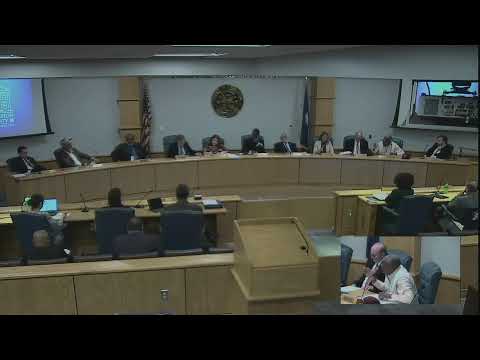
CHARLESTON, S.C. — Charleston County Council voted Oct. 28 to advance a package of overlay and zoning changes affecting the 10 Mile area and to allow an exception permitting the Tisdale parcel to opt out of the overlay. The motion to advance the ordinance with that exception passed on the roll call recorded during this session.
Thomas Tisdale, who identified himself as a long-term resident of the 10 Mile area, told the council he and his wife, both 77, needed to be able to sell their land to assure medical care and financial security. “We need to be able to sell our land,” Tisdale said during public comment, citing health and age. Tisdale Jr. echoed his father, saying the family has lived in 10 Mile for about 50 years and asked that their parcel be completely excluded from the overlay.
Supporters of the overlay urged the council not to allow opt-outs generally. Fran White, a community member, said opting out weakens protections the overlay would provide and asked the council to keep parcels in place unless there was a change needed to accommodate affordable or attainable housing.
Council debate focused on whether the Tisdale exemption would alter permitted density in the area. Council staff clarified there are two separate geography-based issues: the Tisdale parcel sits inside the urban growth boundary and had already been exempted from a prior downzoning; other parts of the district under discussion are outside the urban growth boundary, where the overlay proposes upzoning from roughly one dwelling per three acres to one dwelling per acre.
Councilmember Wurman and others said the Tisdale parcel’s situation is distinct because it was previously opted out, and that the exception would not change the parcel’s zoning rights. Councilmember Kobrovsky (spelling in the record varied) expressed concern about precedent and urged caution about increasing density across rural parts of his district. Councilmembers stressed the county’s process includes staff review and planning-commission consideration for each zoning request, not automatic county-wide precedent.
Outcome: Motion to advance the overlay with an exception allowing the Tisdale parcel to opt out passed on roll call (recorded as a majority in favor; the clerk summarized the motion as passing with seven ayes, one nay and one no vote in the public record). The vote allows the ordinance package to move forward; additional readings and committee work remain possible.
Why it matters: The overlay debate balances neighborhood preservation and anticipated development. Residents testified that even a single property’s development decisions can change traffic, density and community character; councilmembers voiced concern about setting a precedence for upzoning across larger rural reaches of the county.
What’s next: The overlay package will return for subsequent readings and committee follow-up; staff and councilmembers signaled openness to further amendments and community engagement before final action.