Get Full Government Meeting Transcripts, Videos, & Alerts Forever!
Get email alerts on the Charter Applications 5yr Review topic
No spam. Unsubscribe anytime.
TEA review: recent charter approvals show frequent launch delays, enrollment shortfalls and mixed early performance; panel calls for stronger pre‑ and post‑auth
Summary
TEA presented a five‑year review of open‑enrollment charter applications (generations 25–29). Of 123 applicants, 90 went to external review, 46 reached capacity interviews, 30 were recommended by the commissioner and 17 were non‑vetoed by the board. Agency staff reported 65% of new schools opened on time; the remainder were delayed primarily by f
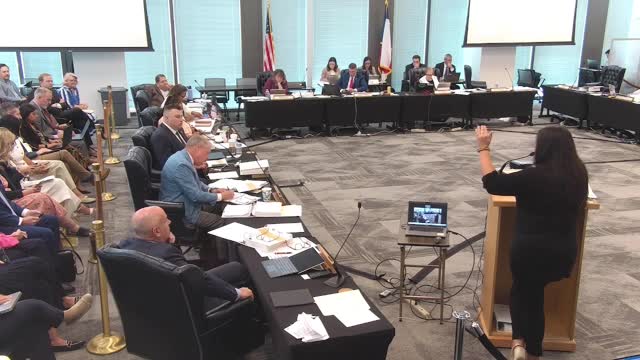
Texas Education Agency authorizing staff presented a five‑year summary of open‑enrollment charter applications covering recent cycles (generations 25–29) at the State Board of Education meeting on Sept. 9, 2025.
Key numbers: TEA reported that between those five cycles it received 123 applications, advanced 90 to external review and recommended 30 to the commissioner; 17 schools ultimately reached board action and were not vetoed. TEA said roughly 65% of the schools that received non‑vetoed approvals opened on schedule; most launch delays were related to facility acquisition or pandemic‑era construction and cost disruptions. In a separate dataset for recently approved schools, TEA staff also reported first‑year enrollment often fell short of applicants’ year‑one projections, with average first‑year enrollment roughly half the projected target across the group reporting in this meeting.
Performance and oversight: Marion Shetty (TEA) told the board the agency calculates finance and academic ratings using the established Charter First financial framework and the state accountability system. Several public commenters and board members said the board sees too many later low academic ratings and closures among newly approved charters and asked whether TEA’s application review sufficiently verifies out‑of‑state operators’ historical performance and whether post‑launch oversight is adequate. TEA outlined a stepped set of supports—monthly planning calls, mandatory pre‑opening checklists during the “year 0” planning year, and an expansion of a new “Strong Charter Launch” coaching program to provide in‑person coaching and enrollment and facilities help through the launch and first year.
What troubled board members and public commenters: Board members and public testifiers pointed to gaps between applicants’ enrollment projections and actual first‑year numbers and raised questions about whether TEA’s initial capacity review should require additional evidence or contingency plans tied to enrollment, staffing and facilities. Some speakers called for more public evidence in the application packages about prior operator performance and a clearer presentation of the neighborhood and market data used to assess demand.
TEA’s takeaways and next steps: Staff said the agency has incrementally tightened application guidance (including updated financial templates and an HQIM alignment section), added a virtual/hybrid addendum and will include a publishable data pack in future application materials showing nearby schools and charter saturation. TEA also said it will continue to deploy year‑0 coaching and use federal start‑up grant funds to support eligible new campuses.
Bottom line: The review showed the majority of recent approvals did open and remain operational but that enrollment shortfalls and launch delays are common and that post‑authorization supports have been expanded. The board’s questions indicate interest in additional verification at application time and clearer, public metrics about local demand and past operator history before the board acts on recommendations.