Get Full Government Meeting Transcripts, Videos, & Alerts Forever!
Get email alerts on the Instructional Materials Publisher Testimony topic
No spam. Unsubscribe anytime.
Texas publisher Lohman asks SBOE to delay judgment after IMRA mandate gave eight weeks to comply
Summary
Alan Lohman, founder and CEO of Lohman Education, testified to the State Board of Education on Sept. 9 that his Texas‑based supplemental publisher had only eight weeks to submit for IMRA 2025 after being told the board mandated participation, and he asked the board to place the company on a no‑action list so it can resubmit in 2026.
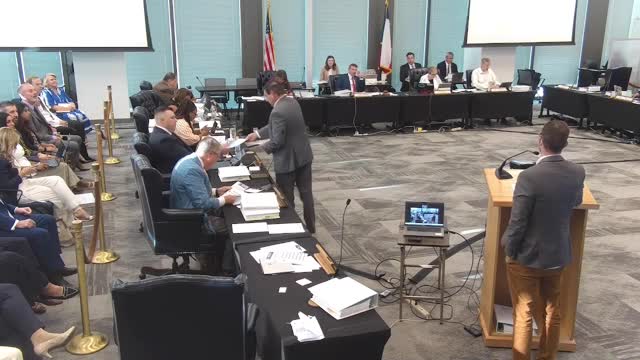
Alan Lohman, founder and chief executive officer of Texas publisher Lohman Education, told the State Board of Education during public testimony on Sept. 9 that his company was surprised to learn the board required its products to participate in the 2025 Instructional Materials Review and Approval (IMRA) cycle and that the company had only about eight weeks to prepare a submission.
Lohman said his company’s materials earned “100% scores in TEKS and ELPS alignment” and “near perfect” suitability scores in the limited time available. He told the board he believes one suitability flag reported in the preliminary IMRA materials was a technology error and provided supplemental documentation to staff. He asked the board to place Lohman Education on a no‑action list, which would allow the company to return in 2026 with a fuller submission and avoid immediate placement on a rejected list that could limit district purchases.
Why it matters: Under the state’s IMRA process and recent statutory changes discussed at the meeting, placement of a product on a “rejected” list can restrict districts from using certain state funds to purchase those materials. House Bill 100, implemented in recent legislative sessions and discussed by agency staff during the meeting, increases the stakes of any rejected designation by broadening restrictions on district purchases.
What Lohman said: Lohman told the board that because his firm is Texas‑focused, serves more than 700 districts in the state, and operates with roughly 35 employees, the expedited timeline had material business and instructional impacts. He said the company initially planned to submit for the 2026 IMRA cycle, but an agency/board mandate in January required participation in 2025. He urged the board to move Lohman to a no‑action designation so the company and districts that use its materials would not face immediate funding restrictions.
Response and follow‑up at the meeting: Agency staff clarified the sequence: publications were called for in December 2024; in January the board voted to require certain products; the agency notified publishers on Feb. 4. Board members asked detailed questions about the data Lohman provided, the nature of the suitability flag, and the effect of a rejected list under then‑recent statute. Colin Dempsey, TEA’s senior division director overseeing the MR review, and other staff explained appeals windows and the publisher response process.
Bottom line: Lohman’s request illustrated a central tension discussed throughout the meeting—how to balance a transparent, high‑quality review process that allows publishers an opportunity to cure or respond, while preserving assurance for districts and families that materials adopted or approved will meet the state’s alignment and suitability requirements. Lohman’s formal request to be placed on a no‑action list will be considered through the agency’s normal recalibration, appeal and November final‑vote timeline.
Sources: Public testimony to the State Board of Education by Alan Lohman (00:02:13 start); agency explanation by Colin Dempsey (00:17:15 start).