
Public Schools of Robeson County narrowly misses exit from low‑performing list; district reports gains across most assessments
Get AI-powered insights, summaries, and transcripts
Sign Up Free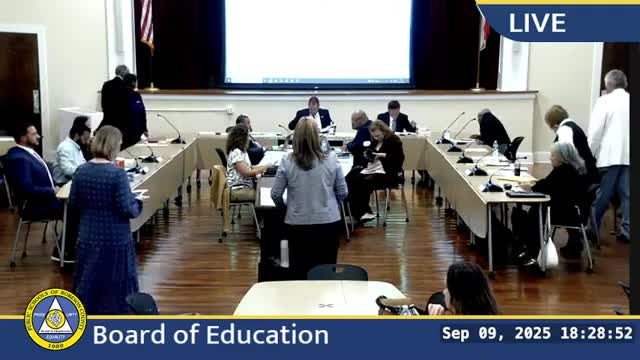
Summary
Public Schools of Robeson County officials presented 2024–25 accountability results to the board, reporting districtwide gains and noting the district was “just 1 school away, missing by only 8 hundredths of a point from coming off of the low performing list.”
Public Schools of Robeson County officials presented 2024–25 end‑of‑year accountability results at the board's September meeting, reporting gains across many assessments while noting a few notable exceptions.
Dr. Wendy Dorsey Carr and Dr. Deborah Dallas told the Board of Education that the district was "just 1 school away, missing by only 8 hundredths of a point from coming off of the low performing list." They said 23 of the district's 36 schools met or exceeded growth and that eight schools exited low‑performing status compared with the prior year.
The district's four‑year graduation rate rose to 85.6 percent, up from 83.5 percent the previous year, officials said. Presenters reported that students scored higher in 13 of 15 math and reading assessments, with third‑grade reading and eighth‑grade math trailing 2023–24 results. Dr. Carr and Dr. Dallas attributed some year‑to‑year differences to changes in statewide assessments: the third‑grade administration included a new form (NCPAT) and eighth graders took Math I and a new eighth‑grade science test for the first time, which limited direct comparisons.
Board members pressed for details about the drop in third‑grade reading. Dr. Carr described steps the district has taken, including regrouping students, developing individual reading plans, implementing an updated K–2 skills block that emphasizes phonemic awareness and phonics, and administering beginning‑of‑year screening (DIBELS/Amplify) to identify needs early. “We’ve already started regrouping our kids,” she said, adding that classroom teachers and principals are using intervention plans and school improvement teams to target skill gaps.
Members and staff also discussed professional development. Dr. Carr described LETRS, a state‑required literacy training for K–5 teachers that the district is rolling out in cohorts. "We're starting now; this year was our first year that we had almost 300 teachers in our classrooms that had finished LETRS," she said, and the district will enroll additional teachers in subsequent years so they can apply strategies from the training in daily instruction.
The district also described differences between short, timed screening measures (DIBELS) used in K–2 and longer end‑of‑grade passages that emphasize sustained comprehension and stamina, which officials said contributes to the apparent mismatch between strong K–2 screening results and third‑grade EOG outcomes. Board members urged adding practices that build reading endurance and comprehension across second and third grade.
Administrators outlined other school‑level supports. Several principals have targeted Title I funds to hire interventionists for specific grades; East Robinson was cited as an example of a school that focused several interventionists primarily on third grade. The district also reported work to strengthen principal coaching, to schedule targeted professional development (notably for eighth‑grade Math I teachers), and to allocate resources based on grade‑level and teacher‑level diagnostic data.
Board members raised concerns about a recurring set of low‑performing schools and asked about the state’s four‑year improvement timeline. Administrators said the state requires schools to be on improvement plans and that, after multiple years without required progress, options include leadership changes. The district said it is using principal coaches and targeted problem solving, but acknowledged changes take time under the state accountability formula, which weights proficiency heavily.
The board also questioned chronic absenteeism as a contributor to low performance. The superintendent said the district uses family‑engagement strategies and school social workers and that compulsory‑attendance steps (notifications and potential court referral) are part of the enforcement mix. Officials said they will provide additional attendance data by school.
The presentation included a school‑by‑school breakdown showing a mix of gains and declines; administrators said they are meeting with each principal to review data and refine interventions.
The board did not take a formal vote on the data report; presenters provided the accountability booklets and said follow‑up briefings and principal meetings are scheduled.