Get Full Government Meeting Transcripts, Videos, & Alerts Forever!
Get email alerts on the Healthy Sustainable Schools topic
No spam. Unsubscribe anytime.
Unions, educators and contractors back 'healthy and sustainable schools' bill to fix ventilation and create jobs
Summary
H.3476/S.2275 would create an office for healthy and sustainable schools, fund assessments and upgrades, and prioritize environmental‑justice communities. Labor unions emphasized apprenticeship use and prevailing‑wage requirements; some contractor groups warned that strict PLA and apprenticeship thresholds could reduce competition.
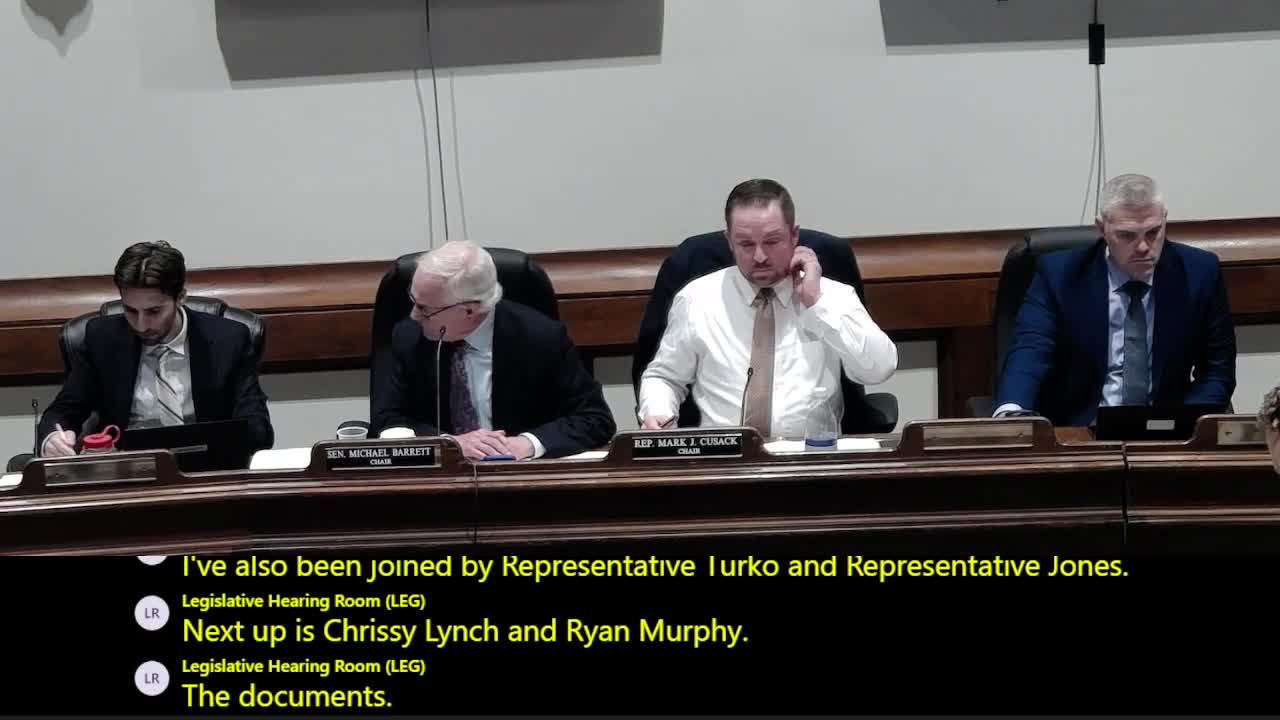
Chrissy Lynch, president of the Massachusetts AFL‑CIO, and Ryan Murphy of Climate Jobs Massachusetts urged support for H.3476/S.2275, saying the bill would assess and rebuild energy infrastructure in public schools and produce union construction jobs. "This bill would assess the energy infrastructure in our public schools and rebuild them in the most energy efficient possible way that also supports good union construction jobs," Lynch told the committee.
Ryan Murphy said the measure would prioritize environmental‑justice communities and require the use of state‑certified apprenticeships and responsible contracting practices so projects train workers while controlling long‑term costs. "Let's identify the oldest boilers, the worst air ducts, and crumbling insulation, and let's fix them with highly trained workers and responsible contractors," Murphy said.
Construction‑trade witnesses including representatives of Heat and Frost Insulators Local 6 and the Sheet Metal Workers described insulation and mechanical insulation as high‑impact, fast‑payback measures that improve indoor air quality and reduce lifetime energy use. They asked the committee to require registered apprentice graduates and OSHA training on school work paid at prevailing wages.
Representatives of Associated Builders of Contractors opposed some proposed procurement language, saying the bill's PLA and apprenticeship requirements—such as a 60% registered‑apprentice workforce threshold—could exclude open‑shop contractors and reduce competition for public projects. Greg Beeman (Associated Builders of Contractors) urged the committee to revise thresholds to avoid excluding qualified firms.
Ending: Witnesses asked the committee to balance workforce standards that protect jobs and ensure quality with procurement rules that preserve competition, and to report the bill favorably with clarifications on PLA and apprenticeship language.